Posts tonen met het label Pau Gasol. Alle posts tonen

woensdag 3 januari 2024

NRC COLUMNIST MARIJN DE VRIES OVER...´Haantjessport (voetbal) en het Goede Voorbeeld...Basketball!´ Over Cocaches Pop en Becky Hammon (Hall of Fame Speech), Pau Gasol (Brief), Sherida Spitze, Pierre van Hooijdonk, (Kleedkamercultuur en en mannen met lef)


Het ´nationale debat´ nadat Sherida Spitse ´het waagde´ om te zeggen dat ze ooit coach in het mannen voetbal wilde worden...het liefst bij Ajax...en de belachelijke reactie van Pierre van Hooijdonk daarop...

*

Haantjessport (voetbal) en het Goede Voorbeeld...Basketball!

column Marijn de Vries


Marijn de Vries is oud-profwielrenner en journalist.

Ik weet niet, Sherida, of je de speech kent van Becky Hammon, basketbalcoach uit de Verenigde Staten. Deze zomer werd ze opgenomen in de Hall of Fame. Je weet ongetwijfeld hoe groot basketbal is in de VS. Een echte mannensport, traditioneel, je zou bijna zeggen: een haantjessport.

Becky Hammon is een baanbreker. „Kan niet” en „hoort niet” staan niet in haar woordenboek. Ze is de eerste vrouw in de geschiedenis die als hoofdcoach een mannenteam in de NBA heeft geleid. Dat was in 2020 tijdens de officiële competitie, of eigenlijk in 2015 al, toen ze San Antonio Spurs naar de titel in de Summer League bracht.

In 2014 werd ze door Gregg Popovich, de vaste hoofdcoach van de Spurs, aangesteld als zijn assistent. „Pop, ik ga je niet aankijken”, zei ze in augustus, tijdens haar speech voor de Hall of Fame. Ze moest slikken. Popovich schoot vol. Er klonk applaus, een warm applaus, omdat iedereen wist hoe betekenisvol dit moment was. „Je probeerde niet iets moedigs te doen toen je me aannam. Maar je deed iets wat niemand in de professionele sport ooit deed.”

De hele week is het gesprek dat jij zondag voerde in Studio Voetbal blijven hangen, Sherida. Je gooide het gewoon op tafel: ik wil na mijn voetbalcarrière trainer worden bij de mannen. Het liefst bij Ajax. Ik denk dat ik dat kan. Zo, dacht ik, dat staat. Bravo. Pierre van Hooijdonk dacht dat je dat niet zou kunnen. Dat ligt niet aan jou, maar aan de mannen. Zo verwoordde hij het niet, maar dat is wel wat hij zei: mannen in een haantjessport als voetbal zullen een vrouw voor de groep nooit serieus nemen. En hoe moet dat in de kleedkamer?

Ik moest denken aan sterspeler Pau Gasol van San Antonio, die in 2018 hetzelfde gezeur over Hammon zat was. De kleedkamer werd ook daar aangehaald, en het haantjesgedrag. Bovendien kan het vrouwelijk brein het atletisch vermogen van een man niet bevatten, was een breed gedragen mening onder publiek en pers. Gasol schreef een open brief, waarin hij zei: Becky Hammon is geen vrouwelijke coach, ze is gewoon coach. Een topcoach. Onze coach. Technisch en communicatief begaafd. Door te stellen dat ze niet tegen de kleedkamercultuur zou kunnen, zeg je eigenlijk dat wij niet professioneel zijn.

Gelukkig had niet iedereen aan tafel bij Studio Voetbal dezelfde visie als Van Hooijdonk. NOS-verslaggever Jeroen Stekelenburg sprak zich op z’n Gasols uit: waarom zou Sherida Spitse geen trainer in de Eredivisie kunnen zijn? Als het nog nooit gedaan is, weet je dat toch niet? Ergens moet zoiets beginnen.

Iemand als jij, die haar ambitie zo duidelijk uitspreekt en haar sporen heeft verdiend, zou prima de eerste kunnen zijn. Je moet het niet forceren, je moet kijken naar kwaliteiten – werd er nog aan toegevoegd.

Op moeilijke momenten, waarin de wereld over haar heen viel, kon Hammon altijd bouwen op coach Pop. Het gaat niet over man of vrouw zijn, zei hij dan. Jij bent fantastisch in wat je doet. Dus wees gewoon jezelf. Wees gewoon jezelf.

Ik denk dat ook jij het fantastisch gaat doen als je er eenmaal zit, Sherida, maar in je eentje krijg je die positie niet. Je hebt mannen nodig die erachter staan. Mannen die een coach Pop of een Pau Gasol durven zijn. Mannen met lef.

Marijn de Vries is oud-profwielrenner en journalist.


Een versie van dit artikel verscheen ook in de krant van 16 december 2023

Nog veel meer Columns van Marijn de Vries   ---  Hier  ---


zondag 20 augustus 2023

AANRADER! GREAT NAISMITH HALL OF FAME SPEECHES: Tony Parker, Pau Gasol, Dirk Nowitzki, Coach Pop, Becky Hammon en Dwyane Wade @James Naismith Hall of Fame 2023 Enschrinement - The International / SA Spurs edition

Every Hall of Fame Enshrinement Speech from the #23HoopClass


donderdag 7 september 2017

INTERVIEW IVICA SKELIN / RECORD PAU GASOL / ORANJE ARMADA EK'S/WK-QUALIFIERS / COLUMN/DAGBOEK AART DEKKER / FIBA EUROBASKET 2017: Dagboek uit Cluj-Napoca, Roemenië(5) – Maandag 4 t/m Donderdag 7 september 2017 – 'Goofy' Pau Gasol

U ziet het; mijn Dagboek-afleveringen zijn inmiddels niet meer dagelijks, en overspannen een steeds groter aantall en uren, dagen zelfs...

Hoe dat komt?

Omdat -hoe mooi het ook is om een Groot Basketball Event als EuroBasket bij te wonen, en zelfs als dat in de relatieve luxe van een plaats op de Media-Tribune is- het toch gewoon best zwaar is om zo'n week lang iedere dag drie wedstrijden te volgen -dat kost je namelijk zo'n ruime acht uur, en met je laatste geschreven stukje afronden en on-line zetten zelfs nog meer-, en als je dan ook nog met collega Arie Int Veld een Live-Talk-Show'tje maakt, dan kan het wel zo'n elf(11!) uur duren voordat je terug bent in je hotel...dat is voor een gezond iemand al erg zwaar -want denk niet dat we hier relaxed die wedstrijdjes zitten te kijken; ik denk dat ik eigenlijk aan een stuk hard aan het werk ben, met soms alleen even een korte pauze om wat te eten, als dat er dan nog is tenminste...- voor iemand die chronisch ziek is zoals ik is het zoveel te zwaar dat ik de rustdagen ook echt grotendeels slapend op die hotelkamer heb doorgebracht...en dan nog, als ik dit weekend thuis kom, dan zal ik zeker een aantal dagen fors bij moeten slapen...

Niemand hoeft mij zielig te vinden; dat doe ik zelf ook niet. Maar ik beschrijf het omdat ik een realistisch beeld wil geven van 'de Life-Style die Internationaal Basketball' heet. Een stijl van leven die ik nu juist probeer te promoten onder Nederlandse Basketball-Liefhebbers! Bereik ik dan niet net het omgekeerde van wat ik wil -meer en meer mensen warm maken om ook deze Grote Internationale Basketball-Toernooien te gaan bezoeken? En dat zelfs te doen als er geen Oranje deelname is? Dat denk ik niet; als een Echte Basketball-Liefhebber het eenmaal heeft meegemaakt, dan wil hij/zij dat vaker, zeker als er een aanleiding voor is.

Aanleiding?

Nou ja de meest voor de hand liggende 'Aanleiding' om de knoop door te hakken en te gaan zou natuurlijk Oranje van kleur zijn... Om on-line Game-tickets te kopen -daar moet je nogal eens op tijd bij zijn! Zet dat dus op je checklist voor het geval dat- , de Reis uit te stippelen -kan je rijden? Of wordt het Vliegen? Ga je in een Hotel, Hostel of AirBnB? Of wordt het een plekje op een Camping-, Vakantiedagen opnemen, etc, Etc...

De meest voor de hand liggende Aanleiding is natuurlijk als een Oranje Basketball Team zich heeft Gekwalificeerd. Vroeger gebeurde dat nog weleens, tot 28 jaar geleden is dan mijn 'vroeger'...

Zagreb 2015 was dus zo'n Aanleiding. Ik heb daar middels een Facebook-group -'Orange Fever Travel&Support Club' geprobeerd een push aan te geven: "Mensen, grijp de kans en ga naar Zagreb! Je krijgt er absoluut geen spijt van als je dit advies opvolgt!" De Gedachte erachter: 'als mensen elkaar helpen bij de practische aspecten van het naar een Groot Internationaal Kampioenschap, dan wordt de drempel lager, en maken mensen elkaar warm om ook te gaan'.

Mijn doel was -en is eigenlijk nog steeds- Minimaal 1.000 Knotsgekke in Oranje gehulde Echte Fans; dus mensen die door dik en dun achter het Team blijven staan en door moeilijke momenten sleuren'. Ik was in Zagreb in 1989 en in 2015 als 'gewone fan' en dus niet als journalist, en toen ik van Eric Buis ergens de opmerking las dat hij mij in Amsterdam Oranje in Zagreb hoorde aanmoedigen, wist ik dat ik alles had gedaan wat binnen mijn macht lag...

Er waren er daar (in 2015) nog lang geen Duizend -van die Echte Oranje Fans- maar het viel me nog niet eens tegen; die 200 minimaal en maximaal 300 M/V die erbij waren...

Iemand die erbij was en nu spijt heeft?

Nee, dacht ik wel...dus volgende keer wel die Duizend?

Laten we wel wezen: IJsland met 320.000 inwoners had er Duizend in Helsinki!
Dan moeten wij -met 17.000.000 immers- er toch wel Duizend (of meer!) op de been kunnen brengen..?

Maar -ik schrijf het deze week niet voor het eerst- dan moeten onze Mannen de komende zes Windows overleven, en dan nog wordt het 2019 voor ze op een Groot Kampioenschap kunnen staan; het Wereld Kampioenschap in China!

En anders/of ook in 2021 op het EK..? In Nederland misschien wel? Dat zou heel erg helpen..!

Eerst 2019 dan maar... Ook dat schreef ik eerder: te beginnen op 23 November 2017 in Almere:

Topsport Centrum Almere: Orange Lions vs. Kroatië

Die zaal moet vol!
En niet zomer vol; hij MOET Stampend,
Oranje-Gloeiend en Kolkend,
en SNIKHEET VOL zijn!!!

Ik weet wel een bandje dat voor de Goede Vibes kan zorgen - ze wonen in Almere,
dus dat scheelt alvast in de reiskosten:


DVBBS & Borgeous - TSUNAMI (Original Mix)

Goed we nemen het een(1) Window per keer, wedstrijd, voor wedstrijd dus; maar daarna in Februari in MartiniPlaza Groningen, en dan sluiten we het Seizoen 2017-2018 af in de Maaspoort in Den Bosch. En dan vind ik eigenlijk dat we in 2019-2019 dus door zouden moeten naar bijvoorbeeld Ahoy Rotterdam, en vervolgens naar bijvoorbeeld de Ziggo Dome..! Want; als Antwerpen een keer per jaar voor de club Antwerp Giants met meer dan 10.000 M/V het Sportpaleis vol heeft, dan moet Nederland toch zeker zo'n aantal op de been kunnen krijgen voor de Orange Lions!?!

Maar ik vind 2019 toch nog wel wat ver weg; er moet 'In Den Vreemde' geoefend worden, en ik heb wel een ideetje -zonder trouwens te weten waar dat A-EK terecht gaat komen-  maar zoals al mijn lezers inmiddels wel zullen weten: De Mannen-U16 van 2017 hebben zijn als Tweede Oranje Basketbal Mannen Jeugd Team Ooit (in de moderne tijd) gepromoveerd naar de A-Divisie!

Van alle mogelijke Promoties is dat -die U16- de belangrijkste; ideaal zou zijn in 2018 ook zowel de MU18 en de MU20 naar de A-Divisie, maar mocht die kortste weg niet gehaald worden, dan kan deze lichting er hopelijk voor zorgen dat uiterlijk over vier jaar ALLE Jeugd Orange Lions op A-Divisie-Niveau komen!

Daar zijn voorbeelden van; dat is bijvoorbeeld de Poolse lichting van Karnowski(Gonzaga, Polen) gelukt; die pikten en passant ook nog -ergens onderweg naar het A-Team- een Medaille op een WK mee...

Maar: 'Er Komen' is Een(1!) ding, 'Er Blijven' een tweede...met andere woorden, dat is misschien nog wel moeilijker!

Dus de MU16 van 2018 verdient alle mogelijke Support om dat wapenfeit te bewerkstelligen - dat is nog nooit een Oranje Lions Jeugd Team gelukt.

En ik stel: zo'n MU16 A-Divisie Europees Kampioenschap is een 'ECHTE AANRADER!'

Er zullen misschien mensen zijn die denken:
"Wat moet ik daar? Een beetje naar Basketballende Jochies kijken?!? Dacht het niet..."

Ik denk dat ik mezelf de op dat niveau 'Meest Ervaren Basketball Kenner van Nederland mag noemen' -ik heb namelijk de MU16-A-EK's van 2001, 2002, 2003, 2004, 2005, 2006, 2007, 2008 (en daarna ook nog wel wat stukjes van toernooien), van A-Z Live bijgewoond, en er minimaal zo'n vier wedstrijden per dag intens gevolgd en geanalyseerd - in het algemeen van de beste speler van elk team tot en met de twaalfde op de bank.

MU16-Basketball op dat niveau hoort bij het Mooiste Basketball dat er Te Zien Valt in de Wereld!!

Waarom?

Omdat MU16-spelers op dat niveau al heel volwassen basketball kunnen spelen, maar nog niet zijn verpest door Roem en Geld; het is dus Prachtig Basketball, Intens en vooral PUUR!

En als we dan ook nog eens de mazzel zouden hebben, dat het in een Echt Groot Basketball-land georganiseerd zou worden...Litouwen of Spanje bijvoorbeeld...dan is het helemaal Perfect..!
En dan moet een ieder maar individueel de afweging maken of het bij alleen een Oranje-wedstrijd per dag blijft, of dat het een dagelijkse onderdompeling wordt in Full-time Basketball, negen uur per dag dus... De middenweg; een Oranje-wedstrijd en dan in de aanloop naar de Eliminatie-wedstrijden wat Krenten uit de Pap, is natuurlijk ook helemaal niet verkeerd. Tegen de tijd dat de Kwart-Finales op het Programma staan, ga je vanzelf meer wedstrijden kijken, dat beloof ik je!

Nog mooier -maar daar durf zelfs ik nauwelijks van te dromen- in 2018 het MU16-A-Divisie-Toernooi in Nederland!

Ik geef het de Heren en Dames-Bobo's maar even ter overweging mee, het zou kunnen...

Maar anders: een Oranje Armada naar de  MU16-A-Divisie in 2018!!!

Pau Gasol wijst -symbolisch- zijn Record-brekende Punten na tegen Hongarije...(Foto: Fiba.com)

Nu nog ff terug naar 'Goofy', en wat die te maken heeft met Pau Gasol...

Terwijl ik dit schrijf, scoort Pau Gasol de punten die hem voorbij Tony Parker Junior brengen als Topscorer Aller Tijden op EuroBasket!

Topscorer Aller Tijden van EuroBasket worden tijdens de 'Uitwedstrijd' tegen Hongarije -altijd lastig!- dit is hooguit een half geintje, het klopt gedeeltelijk nog ook: de Hongaren kwamen, precies volgens het scenario dat ik collega Arie van te voren had geschetst, in het begin van Kwart-4 zelfs bij tot -5 punten, daar was buiten Kroatië helemaal niemand zelfs maar op een lichtjaar afstand bij in de buurt gekomen.

Maar goed, Spanje won, en Pau Gasol passeerde Tony Parker die dat Record de vorige keer afpakte van Dirk Nowitzki, ik schat zo dat die het in Berlijn pakte, maar dat weet ik nu weer net niet helemaal zeker...een lekker 'Huiskamervraagje' misschien?!?

Pau Gasol pakte dus dat Record, relatief vroeg in wat waarschijnlijk zijn laatste EuroBasket is, misschien zelfs wel zijn allerlaatste Grote Toernooi . (Punt dus!)...

Meer over dit Wapenfeit: Fiba.basketball/eurobasket/2017/news/pau-gasol-becomes-all-time-leading-scorer-in-eurobasket-history'

En waarom nu 'Goofy'?

Pau Gasol is misschien wel de Grootste Ster die het op Een Na Beste Basketball-land ter Wereld heeft voortgebracht; zijn carrière op Top-niveau overtreft de 20 jaar inmiddels ruim, en toch...hij blijft altijd een beetje 'the Whiner' die hij al jong ook al was -"hey Ref, zag je dat niet; dat was een Fouuut!"- maar ook, en dat is misschien wel het meest opvallend, een beetje verlegen onder de loftuitingen; het is zeker een heel intelligente man, vrij sociaal ook lijkt het me van een afstandje, en toen de Arena-speaker voor de vierde keer aandacht vroeg voor het feit dat deze Grote Ster de Allerbeste Scorer op EuroBasket Ooit was geworden, had hij echt iets van 'Moet dat nou echt nog een keer? Nu is het wel genoeg geweest hoor!' Dat deed me aan 'Goofy' denken, en het kostte niet veel tijd een bijpassende pose van Goofy zelf te vinden...

Wat kun je de komende dagen nog van mij (en van Arie Int Veld) verwachten?

Ik denk dat dit mijn op-een-na-laatste Dagboek van EuroBasket uit Cluj-Napoca zal zijn...

Er volgen in ieder geval nog:

-de iBasketball-Live_Talk_Show ('Late, very Late!', voor ons dan,maar voor jullie in Nederland rond 22:45hrs, maar ook altijd later terug te kijken!) zal vanavond ook de laatste van dit EK zijn voor Arie en mijzelf...

-nog een Wrap-up Dagboek

-een beschouwing over het Roemenië voor zover we dat hier hebben zien spelen, in relatie tot de Orange Lions, die (hier in Cluj-Napoca?) in Roemenië op 26 November hun eerste Uitwedstrijd in de WK-Qualifiers moeten gaan spelen en...eigenlijk ook moeten winnen!

-de twee gezichten van Ricky Rubio

-een Video-Interview met een van de Fiba-organisatoren hier in Cluj-Napoca; Sinan Taze, komt uiterlijk zondag online op iBasketball.nl.


Het aangekondigde video-Interview met voormalig Donar-Coach en huidige Assistent van Aleksandar Petrovic van Kroatië, Ivica Skelin, staat inmiddels on-line op iBasketball.nl.

Nog genoeg werk aan de winkel dus voor ons!
En genoeg te kijken en lezen voor jou!

Groeten uit Cluj!

AART DEKKER

zondag 15 februari 2015

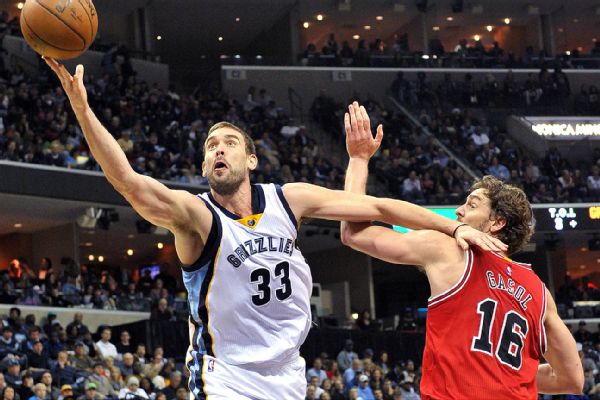
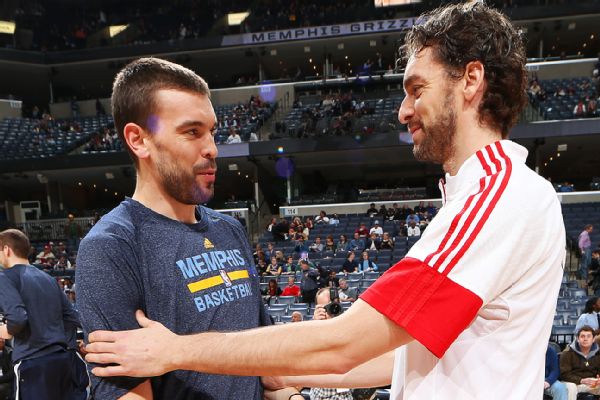
Unieke Broederstrijd in NBA All*Star Game: 'Gasol vs. Gasol'

All-Stars in the family
A Pau Gasol-Marc Gasol showdown makes this NBA All-Star game special
Updated: February 14, 2015, 6:37 PM ET
By Tom Friend | ESPN.com


EVERY CHRISTMAS MORNING, in their Barcelona cottage, young Pau and Marc Gasol would tiptoe out of their bedroom to discover presents under the tree. Pau, four and a half years older, would sit still and admire his gifts. He would open just two or three -- then save the others for later that afternoon. He would even save one for the next day. He wouldn't rip the packages open but would untie them so the wrapping paper could be saved, pressed and reused. Marc, meanwhile, would open his 10 gifts in the matter of a minute. Wrapping paper would be flying and parents would be ducking. "By the time Pau would have opened his second present, I'd broke my first toy already," Marc says.
So there is your scouting report heading into the opening tip of Sunday's NBA All-Star Game. Brother will be jumping center against brother for the first time in league history. One will be clean-shaven, lean and play the game like chess. The other will be bearded, robust and play the game as if it were rugby. Neither is certain how he will react when the cameras are popping, just before they jump ball. Maybe they will grin at each other. But once the game starts, they're pretty sure it will feel like ... Christmas morning.

WHEN PAU'S Chicago Bulls were about to play Marc's Memphis Grizzlies just six days before Christmas, Chicago coach Tom Thibodeau gave his team a full scouting report. He told Joakim Noah that left-handed Zach Randolph likes to post up on the right block. He started to tell Pau about Marc -- and then cut himself off.
"Oh, yeah, you know," he said. "And if you don't know by now, what's the use in telling you?"
The brothers go way back, back to when playing in the NBA was the furthest thing from their minds. Their bodies are polar opposites, and the paths they took are different, but the Gasols are intertwined. One would not be here without the other.
[+] EnlargeMarc Gasol and Pau Gasol
AP Photo/Brandon DillMarc and Pau have always competed fiercely with one another, on and off the court.
Pau was the model child, the straight-A student whose first dreams were to follow in the footsteps of his mother, Marisa, a medical doctor. When Magic Johnson was diagnosed with HIV in 1991, 11-year old Pau wanted to find a cure. Marc didn't give a damn about straight A's. He just wanted to go camping.
The family's annual trips to a wooded Barcelona trailer park were times the brothers bonded. For two weeks, they would share the same tent and same bunk. They would ride bikes, kick a soccer ball and shoot hoops on a dirt court.
As straight-laced as Pau was -- he even went to pingpong camp one summer -- he liked roughing it in the outdoors, and he could be a bear when the moment required it. He and Marc would end up at each other's throats, competing at rock skipping, Uno, bocce ball, you name it. "It's got to be in our DNA," says Marc, "because it's not something we can change. It's not about basketball, either. We don' t like losing to each other in anything. Whatever we play. We play freaking 'Hungry Hippo' and hate to lose."
Yes, a night of "Hungry Hungry Hippos" -- a table game in which your hippo tries to eat more marbles than all the other hippos -- set them off once. One game turned into a best-of-3, which turned into a best-of-5, which turned into a best-of-7. It was like the NBA Finals ... with hippos.

WHEN IT CAME to basketball, their one-on-one battles weren't really battles at all. By his late teens, skinny Pau had sprouted to 7-foot and, on the court, would toy with Marc. Actually, Pau toyed with pretty much everyone in Europe. His breakthrough moment, in 2001, was his MVP performance in the Spanish King's Cup. "He totally exploded and took over," Marc says. "It was pretty unbelievable how he did it." While leading his Barcelona team to the title, Gasol made jump shots, precise passes and everyone on his team better. This was the Pau most NBA executives fell in love with. Marc particularly took note of his brother's journey. Pau had quit medical school to play full-time with the Spanish junior and national teams, who practiced sometimes three times a day and 10 months out of the year. The hard work was paying off. Pau went third overall to Atlanta in the 2001 NBA draft and was traded to the Memphis Grizzlies.
The Gasols held a family meeting. Marisa decided she could move her medical practice to Memphis, and her husband, Agusti' -- a registered nurse -- figured he could find a hospital administrator job. They packed up and flew across the Atlantic with him.
They found a modest house on the outskirts of Memphis and the family -- Marisa, Agusti', Pau, Marc and younger brother Adria', who was 8 at the time - lived together. "Not too many NBA guys would live at home like that," says former Grizzlies coach Hubie Brown. It kept Pau in his comfort zone and also kept his brother just a bedroom away down the hall. But if the American South was culture shock to Pau, it was a revelation to the 16-year-old Marc.
When he began walking the halls at his new private school in Memphis, Lausanne Collegiate School, he was an absolute novelty. Here Marc was, over 300 pounds and pushing 7-feet, with the last name Gasol. Someone marched him in to the basketball coach, Jason Peters, who gulped and dialed his assistant coach, Jon Van Hoozer. "Get over here now," Peters said. "You've gotta see this."
No one at Lausanne had ever seen a student that gargantuan -- considering Marc was nearly as wide as he was tall. To be kind, he still had his baby fat. But the coaches quickly directed him to the gym, where he displayed a feathery touch and the ability to find the open man. Marc quickly meshed with the group. Lausanne was known for taking foreign exchange students, and the team already had a skilled point guard from Yugoslavia. They also conveniently had Jonnie West, the son of Grizzlies executive and Hall of Famer Jerry West. This was a former all-girls school with about 30 boys in Marc's junior class, but with this trio of players, Lausanne was on its way to winning its low-level private school championship.
Down the road at FedEx Forum, Pau was winning hearts in his own understated way. The Grizzlies fan base admired how he attended the ballet and supported the local orchestra. He fit in well with the wine and cheese crowd. On the court, he was just as smooth, winning rookie of the year and averaging 17.6 points a game. Marc's game was still rough around the edges. When he was in town, Pau would sit with his parents at Marc's games, amused at how he would bully the opposing 6-foot-1 centers and curse at the refs in Spanish. "I sugarcoat things a little more than Marc," Pau says. "He's more emotional, more direct."
Marc showed flashes of brilliance, though. He had soft hands, a high basketball IQ and would often start games by taking and making a 3-pointer. Everybody adored him; they just wished he'd mix in a salad. On the trip to Orlando, every time he saw the Golden Arches, Marc would shout, "Woooooo, McDonalds." He'd eat fries while wearing a McDonalds chef's hat.
"He used to come over to my house with Jonnie," Jerry West says, "and he'd eat three double-cheeseburgers with layers of mayo and ketchup. Or three or four double-triples with a big order of fries. Anything you put in front of him he'd eat. He was huge, let's put it that way. Next to his teammates, he looked like a fairy tale character standing over his fiefdom. With that lack of mobility, I wasn't sure he'd be able to get in physical shape."


A stray college coach or two would come in to scout Marc and not know what to make of him. His brother, now a second-year player, was so elegant on the court. Marc, now a high school senior, was nicknamed "The Big Burrito." John Calipari, who at the time was coaching at Memphis, gave no thought to offering Marc a scholarship, according to Van Hoozer. He might have taken him as a walk-on because of his last name, but "I can't see where he would've contributed at all," Van Hoozer says.
Marc was more introspective, though, than anybody ever knew. He and Jonnie West would spend all of their free time at Grizzlies practices and games. And because Shane Battier's wife was a soccer coach at Lausanne, Battier and other Grizzlies players would return the favor and attend Marc's games, too. Marc saw the NBA work ethic, particularly his brother's, up close. Pau would do yoga and seemingly glide up and down the court. "Those two years in Memphis, I was able to see the lifestyle of an NBA player," Marc says. "To see how much they work."
Around that time, in the spring of 2003, Marc called another family meeting. He told Marisa and Agusti' he wanted to return to play for FC Barcelona rather than attend an American college. His parents were against it. There was no telling how far the fun-loving Marc would stray in Barcelona without parental supervision. But Marc had decided he needed to follow in Pau's footsteps. In Spain, practicing three times a day, 10 months a year, his brother had become a burgeoning NBA All-Star. Marc dreamed of doing the same.

MARC TOOK mountain runs, swore off double-triples with mayo and wound up losing about a quarter of his body weight.
By 2006, he was his brother's backup on the Spanish national team. When Pau broke his foot in the FIBA World Championship that year, Spain had to lean on a different Gasol in the gold medal game versus Greece. Marc wound up with seven rebounds and handcuffed the Greek big man, Sofoklis Schortsianitis, in Spain's 70-47 victory. The question was: did anybody in the U.S. see it?
Maybe the Memphis Grizzlies did; maybe the Los Angeles Lakers didn't. But that's the day that set everything that's taken place now in motion. Pau returned to Memphis after the foot injury and -- coming off of his first all-star appearance the year before -- wasn't the same. He played only 59 games in the 2006-07 season, and considering he was owed over $10 million, the Grizzlies began looking to trade him during the 2007-08 season.
The Lakers, desperate to give Kobe Bryant a center to replace Shaquille O'Neal, couldn't pull the trigger soon enough. On Feb. 1, 2008, they gave the Grizzlies Kwame Brown, Aaron McKie, Javaris Crittenton, first round picks in 2008 and 2010 ... and the rights to Marc.
[+] EnlargeMarc Gasol and Pau Gasol
Joe Murphy/NBAE/Getty ImagesPau was the first to have success in the NBA, but he always believed Marc would also find his way.
Just months earlier, the Lakers had drafted Marc in the second round, 48th overall, but had shown little interest in signing him. Marc honestly had thought very little about the Lakers, either. He was playing for Akasvayu Girona of the Spanish League, eventually earning the 2008 league MVP. He was content overseas, and didn't think anyone in the NBA wanted him.
But after the FIBA gold medal game, the Grizzlies considered Marc a dark horse. In fact, Pau had been campaigning for his brother long before that. "I tried to tell them to draft him," Pau says. "And once he was drafted, I tried to tell them to trade for that draft pick after the draft. But they weren't interested at the time. Obviously, they were interested later."
During the trade discussions with the Lakers, West says Grizzlies G.M. Chris Wallace specifically "saw something in Marc" and asked for him. The perception is that Marc was a throw-in, but the Grizzlies were well aware of the kid's potential. They'd seen it at Lausanne when Marc was a wide-body, and they'd seen it on film from Europe. "They knew how good the kid was going to be," Hubie Brown says of Memphis. "The Lakers, I'm telling you, had no idea."

THE FIRST TIME they squared off in the NBA -- three days before Christmas, 2008 -- was a victory for Pau, both on the scoreboard and head-to-head. Pau had 15 points and seven boards in a Lakers victory, while Marc had eight and seven.
They didn't look each other in the eye all night.
Pau says he never looks an opponent in the eye, but Marc says that night set the tone for their annual battles. "It's pretty rare that we have eye contact. I can't recall a situation where we have had eye contact. Maybe after a bad call. We'll say, like, 'Well, I didn't foul you.'"
Marc was still a work in progress when he arrived back in Memphis from Spain. But the Grizzlies fan base, once in love with Pau, fell harder for his kid brother. They had remembered him as the fat kid who loved cheeseburgers. When Van Hoozer saw how the "Big Burrito" had transformed his body upon his return to town, he did a double-triple take.
"Pau was quiet and kept to himself," says Van Hoozer. "But we're a blue-collar fan base. We want players who are physical and have a chip on their shoulder. And here's Marc. He has a mean streak. He's kind of the anti-Pau and became like a cult hero. He was a Memphis guy from high school and became one of the most popular Grizzlies ever."
Marc had the same feel for the game as Pau did, the same soft touch. But, according to West, he was the superior passer. Brown, in fact, says Marc would feed teammate Zach Randolph better in the post than the Grizzlie point guards did. Pau may have won rings with the Lakers in 2009 and 2010, but Marc was an All-Star in 2012 and was clearly the ascending Gasol.
Still, the head-to-head matchups told a different tale. Coming into this season, Pau's teams had won 12 of the 18 matchups, and Pau had averaged 14.8 points and 10 boards against the Grizzlies while Marc averaged 11.7 and 9.4 against the Lakers. So big brother still had the edge heading into this past summer -- not that either Pau or Marc would ever admit it.
"We don't talk about the games," Marc says. "We do not talk. We have too much pride. Whatever time the game ends, one of is going to be mad. Really mad. We have two glasses of red wine, and then we start talking maybe a little bit about it. But before those couple glasses of wine, we don't talk about the game." Their preferred scenario is when both are playing side by side for the Spanish national team - 7-foot Pau at power forward and 7-1 Marc at center. In September, they were on their way to perhaps another FIBA World Championship when Marc's wife went into labor with their first child. It was the day before their quarterfinal against France, and Marc left the team to be with his wife. Pau showed up at the hospital right after baby Julia was born and proposed a toast: "To Julia and a great year ahead."
Over another glass of wine.

THIS 2014-15 season began with Pau in Chicago with the Bulls and Marc thinking championship with the Grizzlies. The Gasols were finally in separate conferences, and there was some sentiment that Chicago and Memphis could actually meet in the NBA Finals. Two brothers squaring off in June seemed enticing. But the thought of these same two brothers squaring off in an All-Star game seemed unrealistic.
Marc was considered the far more complete player now, a superior defender. In fact, West -- now an executive with Golden State -- already was calling Marc "the best center in the NBA." Pau, at 34 years old, seemed too brittle to join Marc as an All-Star. If a Bulls big man were going to make it, it would be Noah.
Pau was averaging 18 and 12 this season compared to Marc's 18.6 and eight. There was no other Eastern Conference center with numbers close to Pau. No European player had ever been voted as an All-Star starter, but in late January the fans voted both Gasols into the starting lineup.
"It was exciting, very exciting," says Pau. "A big honor, not for one of us, but for both. Our family entirely. And I think also for Spanish basketball - European, international basketball. It's just a big, big deal."
Had they not made the game, they were probably going to spend a portion of the All-Star break together, along with Marc's wife and baby Julia. Instead, they are the first brothers to ever be voted in as All-Star starters and the first set of brothers to be all-stars, period, since Tom and Dick Van Arsdale were named reserves in the early 1970s.
When identical twins Tom and Dick Van Arsdale first opposed each other in the 1970 All-Star game, they made a pact not to block each other's shots, and contemplated switching uniforms before the game just to trick the general public. "Now I wish we would've done it," Tom says.
But the Gasols -- ever since their camping trips to the Barcelona countryside -- have always treated their matchups like battle royals. Come Sunday in New York, they will be trying to block each other's shots. "At tip off, it's going to be all smiles," says Marc. "We will have eye contact. We will be embracing that moment.
"But I'm still not going to let him score."

Tom Friend

ESPN.com Senior writer
Tom Friend is a senior writer for ESPN.com and a features reporter for ESPN TV. He has formerly worked for the New York Times, Washington Post, Los Angeles Times, National Sports Daily, Kansas City Star and San Jose Mercury News.
Meer van Tom Friend -- Hier --

Meer over de unieke 'Broederstrijd' -- Hier --

donderdag 30 oktober 2014

NBA weer van start... (Deel-1: Nikola Mirotic en de Chicago Bulls)

...en hoe, met meteen een kraker - San Antonio Spurs vs. Dallas Maverics - live bij Sport1 op het programma, die nog tot het gaatje (101-100) gaat ook ...

Het ontbrak me aan tijd om de vloedgolf aan Preview-informatie - zelfs maar goeddeels - te verstouwen, laat staan dat ik er ook nog eens een aantal stukken van zou kunnen brouwen die voor mijn lezers ook maar iets toe zou voegen aan diezelfde vloedgolf die er wereldwijd k=loskwam, de laatste maand.

Dus doe ik het anders: ik probeer een aantal (lange) artikelen te vinden die wellicht niet iedere druk bezette Nederlandse Basketball-liefhebber zelf direct zou vinden, en waarvan ik denk dat ze ook op de langere termijn interessant zullen blijven om te lezen.

Vandaag Deel-1: Nikola Mirotic en de Chicago Bulls op de site 'Grantland.com', waar nog wel meer leuks te vinden is. Waarom? Omdat m.i. een van de grote vragen vooraf aan het NBA-Seizoen 2014-2015 is: "Zijn de Bulls na alle ellende en drastische ingrepen van de afgelopen seizoenen, dit seizoen weer een van de grote favorieten voor een volgende NBA-Titel?" Ik vermoed dat 'ze in Chicago' - in ieder geval in de Bulls-organisatie - denken van wel... Zonder me er erg in te verdiepen, denk ik dat ze dat met reden kunnen denken, al zou ik mijn geld in 'the East' toch minstens voor een deel (ook) op de Cleveland Cavalliers zetten. Maar een hopelijk nu eindelijk fitte Derrick Rose, met het zelfvertrouwen dat hem al zo jong MVP maakte, Pau Gasol die (ook hopelijk) weer fit, in vorm en met frisse motivatie, echt nog wel een of meer goede seizoenen in de tank zou moeten hebben, een potentieel fantastische 'Rookie' in Doug McDermott, de ultieme 'Warrior & Winner' Yoakim Noah - die zelfs geblesseerd een fantastische speler blijft -, Jimmy Butler - die het punt van een definitieve doorbraak lijkt te naderen -, en verder nog spelers als Taj Gibson, Mike Dunleavy, Nazr Mohamed, Aaron Brooks, Tony Snel, Kirk Hinrich, e.a. erbij, zou zo maar een heel goed en winnend team kunnen blijken te zijn; vergeet niet dat de Bulls al de 'Regular Season Champs' waren op het moment dat de eindeloze reeks blessures van Derrick Rose startte!

Een naam is zeker voor de Amerikaanse fans een intrigerende: Nikola Mirotic. Zijn komst naar Chicago is misschien wel te vergelijken met die van Toni Kukoc een generatie geleden. Alleen denk ik dat 'the Monkey on his shoulder' onvergelijkbaar kleiner is dan Kukoc met zich mee moest zeulen. Of Mirotic helemaal van hetzelfde niveau kan worden als Toni Kukoc indertijd? Ik ben daar nog niet helemaal zeker van, maar het zou kunnen... Maar voor we daar achter zijn, zijn we wel een paar jaar verder...maar da's allen maar heel mooi, tenminste...dat vind ik.

Grantland.com schrijft in een lang, maar lezenswaardig, artikel:


2014-15 NBA PREVIEW - Internationally Known, Locally Respected

From Montenegro to Chicago, Nikola Mirotic is following a path first traced by the Bulls’ original super-Euro, Toni Kukoc. Will he find championships like his forerunner? (Foto: http://chicago-bulls.pl/)

by ROBERT MAYS ON OCTOBER 28, 2014

For almost a decade, Nikola Mirotic had been able to tell Jadran Vujacic anything. On this drowsy drive to Vujacic’s home across Podgorica, the capital of Montenegro, where Mirotic was born and raised, he thought of their time together. Vujacic had been his personal coach for eight years. Mirotic was 13 when they met; he’d never shot a basketball. He was 21 now, the best prospect on the continent, and in that time, Vujacic had come to see him as a son. He was always there, a phone call away, whatever Niko needed, whenever he needed it. But this … this was different.

“I said, ‘Coach, I need to tell you something very important,’” Mirotic recalls. “And he said, ‘OK, what happened?’ Two days, I didn’t sleep, because I was thinking about what I was going to tell him.”

Finally, the words spilled out: Me and your daughter, we are together.

“He didn’t say anything for maybe five minutes,” Mirotic says, smiling.

Mirotic had met Vujacic’s daughter, Nina, more than a year earlier, when he stopped by his coach’s house for dinner. He fell hard, and fast. Vujacic needed some time — a father being a father — but eventually, he softened. “After a month, everything was normal,” Mirotic says. “We were together. Everybody was happy.”

As he tells the story, laughter stops Mirotic more than once. He’s sitting on a bench alongside the Bulls’ practice court, in the team’s sparkling new facility next to the United Center. From this seat, there’s a view of the six championship banners that hang in the windows facing Madison Street.

He married Nina in June 2012. Their son, Aleksandar, was born in May. The next month was marred by the same sleeplessness that plagued the nights before he confessed to Vujacic. Real Madrid, where he had starred for the past four seasons, ended its season in late June. Mirotic had only a few days to plan the next few years. He was drafted 23rd overall in 2011 by Houston, ending up in Chicago after a pair of draft-night deals. In the three years since he was drafted, Mirotic was twice named the best Euroleague player under 22 and was awarded the Spanish League MVP during Real’s championship run in 2013. Chicago finally had the roster and salary-cap space to entice Mirotic and his $3 million buyout to the U.S. The time was now.

Mirotic wavered over the next few days. “We were not sure about the decision, because I still had a contract, my baby was 1 month old,” he says. “The easy decision would have been to stay in Madrid one or two years more. My son was so young to change cities, to change everything.” His hesitance had nothing to do with basketball, with the hanging banners, with the ambitions that a championship-level Bulls team would take into the year. The basketball came easy. It always had. Mirotic had already started over, in his move to Madrid as a teenager. Now, he had a family, a $5.5 million salary, a life. The NBA was calling, but he had reason not to answer.

Podgorica sits in the south of Montenegro, near Albania, about an hour from the mountains and an hour from the Mediterranean Sea. Mirotic’s father ran a handful of businesses while mom raised Nikola and his brother. When he was young, Mirotic had a love affair with soccer. As he started to tower over his friends, he sought out the tallest soccer stars he could find, like Nikola Zigic, a 6-foot-7 striker then playing for Red Star Belgrade in Serbia.

He was 13 — and not far from catching Zigic — when his grandfather laid down a harsh reality. “I was growing every year, and he told me, “‘Nikola, you need to go play basketball.’ I said, ‘No, no, I don’t like basketball.’ He said, ‘You need to try.’ His grandfather knew of a school in Podgorica, a place with a renowned coach who had sent players to some of the best clubs in Europe. Reluctantly, Mirotic agreed.

The 6-foot-9 Jadran Vujacic had played professionally in what was then Yugoslavia for more than two decades. He established the Joker School after his retirement in 1998, and soon after Mirotic arrived, they began working together one-on-one. Before scrimmages or even crudely assembled pickup games, there were weeks — months — of basics. “Before I started to play basketball, I had never seen basketball before,” Mirotic says. “I didn’t like it. It was just soccer in my mind.” Within two years, Mirotic was standing eye-to-eye with Vujacic, armed with a deadly jump shot and handle not fit for someone his size. At 15, a Real Madrid scout coaxed him to Spain.

Mirotic and his parents packed up and moved to Madrid, where he enrolled in the club’s school system and basketball program. Imagine the first day of high school — geometry, biology, 19th-century literature — in a completely foreign language. Mirotic arrived with nothing but his jumper and a Spanish-Montenegrin dictionary that he pulled four or five words from every day. “It was all in Spanish!” he says of his classes. “I had no idea.” Not one to complain, it took months before his teachers realized he was falling behind because he couldn’t understand a word they said. “After that, they got an individual teacher for me,” he says. “Teammates, they helped me with the language. The most important thing was to play good basketball, and they really liked me.”

On the court, Mirotic has all the subtlety of a Kiss show. He’s full of pyro and theatrics, chest pounding and full-throated roars. “I don’t think Nikola thinks he’s better than anyone,” says Igor Crespo, Mirotic’s agent. “But I also don’t think he believes he’s worse than anyone.” The assuredness Mirotic has in excess on the floor is harder to mine off it. He’s cautious on most subjects, completely void of presumption. But when he starts rattling off the accomplishments from his Real Madrid résumé, with a matter-of-fact tone, one after the next, a glint of Nikola the superstar comes through.

“In the last 20 years, no young player who played on the juniors, the cadets, played on the first team,” Mirotic says. “It’s very difficult for the big teams in Europe, when you’re young, to play on the first team.

“I won six titles professionally with them, two Spanish League [championships],1 Super Cup. We lost two Euroleague Championships in the finals. I was MVP of the Spanish League. Two times, Rising Star in Europe. They were very good years.” By the time last season began, Mirotic had gone from a teenager who’d never held a basketball to the best player in all of Europe.

When he landed in Portland for the Nike Hoop Summit in 2010, Duje Dukan was an 18-year-old soon-to-be sophomore at the University of Wisconsin. Even though he’d grown up in Deerfield, Illinois, just outside Chicago, Dukan was born in Croatia, and that week, he was among the 10 players on the World Select team facing off against an American squad featuring Kyrie Irving, Harrison Barnes, and Jared Sullinger. One of the others was a quiet Montenegrin named Nikola Mirotic.

Croatian and Montenegrin are two branches of the Serbo-Croatian language spoken throughout the former Yugoslavia, and part of Dukan’s role was to translate for his English-speaking coaches. “For that whole trip I was kind of [Mirotic’s] personal communicator, because English wasn’t his strong suit,” Dukan says. They spent the entire week together — practice, meals, wasting time in hotel rooms — and in the course of conversation, Dukan mentioned that his father was an international scout for the Chicago Bulls.

On the final day of the tournament, Mirotic met Duje’s father, Ivica, for the first time. They shook hands and said hello. But for Ivica Dukan, it was far from an introduction. He’d known Nikola Mirotic for years.

Jerry Krause’s first Toni Kukoc crusade ended on May 10, 1991. The Bulls’ then–general manager was in Philadelphia — where Chicago was set to play Game 3 of its second-round series against the 76ers — when Kukoc called to tell him he would sign a multiyear deal with Benetton Treviso of the Italian league. “We wish Toni the best of luck in his career in Europe,” Krause said at the time. “It’s commendable that he thought of his family situation, and the volatile political situation in Yugoslavia was a major factor.”

Eleven months earlier, the Bulls had taken Kukoc with the 29th pick in the 1990 draft. That year, Kukoc’s hometown club team, Jugoplastika Split, won the Euroleague title in addition to the Yugoslav First Federal League championship. Kukoc was named the MVP of the Euroleague Final Four, and by draft time he was widely considered the world’s best player not in the NBA. Krause had spent the year telling anyone who would listen about what the Bulls had found halfway around the world, but to those on the outside, the news of Kukoc’s deal in Italy looked like the end for his future in Chicago.

Hope was restored the next summer. At the same Olympic Games where Michael Jordan and Scottie Pippen tried to embarrass him, a retaliation for all of Krause’s talk, Kukoc told reporters that he’d still like to one day play for the Bulls.

Later that month, Krause made the franchise’s most significant foray yet into the world of European basketball. Ivica Dukan had been working for the team as a part-time scout for the better part of two years, but on August 21, 1992, the Bulls named him their supervisor of European scouting. With a 10-month-old son in tow, Dukan moved his family from Croatia to the suburbs of Chicago. By hiring Dukan, Krause filled two holes in his front office: a steadying presence in Europe and a friendly ear for the prize he still had there. Dukan’s last season of professional basketball was in 1988, when he was the captain of the same Jugoplastika Split team that employed a rookie named Toni Kukoc.

Dukan wasn’t only a friend to Kukoc, but a mentor. And whenever his scouting trips overlapped with Benetton’s schedule during the 1992-93 season, Dukan took Kukoc to dinner and laid out the benefits of coming to Chicago. “He said it would be important to try to get out of that contract and come here as soon as possible, just because of the idea that the whole team is intact, that they’re winning a championship,” Kukoc says. “That appealed to me, and it was a very nice idea.” It was the last season Kukoc ever played in Italy. “I don’t want to go down in history as Toni Kukoc’s warden,” Treviso owner Gilberto Benetton said at the time.2 “If he will ask me to set him free, to let him go play with the Bulls, I will not say no just for the fun of it. We will sit down at a table together and we will talk, just me and Toni.” When they did, it ended with Kukoc leaving the team with three years left on his contract.

Kukoc says that even without Dukan’s influence, he would have ended up in Chicago. Above all, he wanted more as a basketball player. “The NBA was something kind of far away that we didn’t have a full grasp of,” Kukoc says. “We just wanted to come and try to see just how good we are.” It was after Kukoc arrived that Dukan became truly indispensable.

Dukan and his family became an outlet for the Kukocs for whatever they needed. They saw each other socially. Their wives and children became friends. And on the court, Dukan was there anytime Kukoc started to doubt his place in the NBA. “Once you get here, you’ve got to have a sense of having somebody to talk with if you really needed it — if things aren’t going right, if you’re not playing well, anything,” Kukoc says.

“He knew my game a lot, so he would tell me the things that I needed to work on. It was mainly to just relax, don’t listen to everybody, don’t be influenced by whatever the people are saying. Just play your game. You’re good enough to succeed. It was the comfort of an older brother.”

There was nowhere to watch the NBA draft in Bilbao. This was 2011, and the Spanish national team had arrived in the city two weeks early for the FIBA U20 European Championship. They’d just finished a practice when Mirotic returned to his room to scour the web. When he came up empty, he started calling his agent every 20 minutes.

Mirotic was 16 when he hired Crespo. The two were together for nearly every step of Mirotic’s career in Madrid, including his ascension the previous year in his first full-time stint with the senior team. He averaged 17.6 points per 40 minutes while shooting nearly 39 percent from 3.

No one saw it coming. Mirotic — who played the season on his original contract, the deal he signed with Real Madrid when the club found him at 15 — had become a steal. Crespo saw the opportunity of the NBA draft as twofold: It would provide some leverage in a renegotiation with Madrid while also getting the clock ticking should Nikola want to eventually leave for the NBA. By April, the first part of the plan was implemented. A week after submitting his name for the draft and five days after winning the Euroleague’s Rising Star award, Real Madrid handed Mirotic an extension that ran through the 2016 season. All that remained was the question of his NBA future.

Bulls general manager Gar Forman first saw Mirotic play in person at the Nike Hoop Summit the previous summer. He’d seen Dukan’s reports about Mirotic, but Forman makes a point to see priority players live. “Just so we’re comparing apples to apples,” he says. What he saw was a 6-foot-10 shooter with tantalizing skills: passing, ballhandling, scoring ability. The Bulls held a pair of first-round picks in 2011, 28th and 30th overall.3 Chicago was hopeful it could snag Mirotic at 28, but before the draft, Forman got a tip that Sam Presti and the Thunder, sitting at no. 24, were eyeing him. If the Bulls wanted him, they would have to do some dealing.

It was creeping toward dawn in Bilbao as the first round wound down. Between calls to Crespo, Mirotic was convincing his teammates to stave off sleep. “It was long!” Mirotic says. “In Spain, it was three in the morning. Everyone was like, ‘Come on, Niko. Maybe you’ll go in the second round, so I go to sleep.’ I said, “No, no! Wait!’” They didn’t have to wait much longer. The Rockets selected Mirotic with the 23rd pick and quickly traded his rights to Minnesota. There, Forman found his partner in Timberwolves general manager David Kahn, who sent Mirotic — drafted one selection before the Thunder ­— to the Bulls for no. 28, no. 43, and cash. This time, Crespo was the one calling. “He said, ‘Nikola, you’re no. 23, with Chicago.’ I was with my teammates, and we were celebrating at the hotel. I was like a celebrity.”

The plan Crespo devised had worked better than Mirotic could have dreamed. Both his body and his game could use a few more seasons before a test in the NBA. “We couldn’t have been happier,” Crespo says. “It was a perfect match. The fact that the team didn’t need a player right away. The fact that they didn’t have the room for him at the time. The fact that they really wanted him. We were very lucky, and you have to be very lucky in the draft.”

Duje Dukan arrived in Bilbao later that week, as part of the U20 Croatian national team, and the old teammates spent much of the trip catching up. “It was funny,” Dukan says. “I had a Bulls shirt, and I kept wearing it around. At some point [Nikola] says, ‘Man, where did you get that?’ I said, ‘How am I not going to have it? I’ve been a Bulls fan my whole life.’” With a closet full of them back home, Dukan knew what he had to do. “The face that he had when I gave him that shirt … ” Dukan says. “He was so happy.”

Kukoc winnende schot tegen Orlando in 1993:


Ivica Dukan could play an action-movie fixer any day — a younger, Croatian Mike Ehrmantraut. “When you look at him, he looks very serious,” Mirotic says. “Like, ‘Be careful, this guy.’” Even his son knows how his father can seem to those who’ve never met him. “From afar,” Duje says, “he’s a very intimidating guy.”

Foto Aart Dekker

Dukan declined an interview request for this story. He turns down a lot of them. One of the few times “Duke” has talked at length about Duke was in late 1997. It was a Q&A with BasketBull magazine, then a monthly perk for season-ticket holders. “It is hard when you have the family and kids and you spend a lot of time away from home,” Dukan said of all of his traveling. “That’s the job. I have a six-year-old son who is missing me a lot. He’s a basketball guy.” That son is now a redshirt senior at Wisconsin. “He’s the type that doesn’t like to do any sort of self-promotion,” Duje says. “He’s always kind of been that type, who’s done it his own way. He never wanted a lot of attention.”

When John Paxson took over the Bulls front office in 2003, he kept Dukan on as director of international scouting. “One of the great pieces of advice I got from [Jerry Krause] is to trust Ivica,” Paxson told the Chicago Sun-Times at the time. Forman was promoted to general manager in 2009, and trips to Europe have been a chance to see just how ingrained Dukan is in the continent’s basketball universe. “It was pretty seamless when I took over this job,” Forman says. “I think Duke is the best there is in the business. He’s got terrific contacts all over the world. He’s got so many contacts that as young guys are coming on the scene, he’s got people calling him all the time.”

In 2006, those contacts brought him to Turkey, where a 7-foot shot-blocking maniac named Omer Asik was playing his first year of professional basketball with Fenerbahce in the Turkish Basketball League. “I just remember him saying that not a lot of people knew about him,” Duje Dukan says, “and they were hoping they could get him in the second round before anyone found out about him.” Chicago did take Asik in the second round during the 2008 draft. He had two years remaining on his deal in Turkey, and the Bulls planned to bring him over before the 2010 season.

“That guy never left the gym,” Bulls coach Tom Thibodeau says of Asik’s first summer in Chicago. “I’d go at night, and he’d be there again. You could see how committed he was, and how hard he worked. Once we started practice, I could see how quickly he picked up things.” Asik played so well in the preseason that he remained a part of the rotation his entire rookie year for a Bulls team that won 62 games.

The Bulls couldn’t wait out Mirotic’s deal in the same way, but in the early days after he was drafted, he says the team respected his status in Madrid. They knew he had a contract and a job to do. But when Dukan passed through Spain, the two would regularly sit down for a meal. The conversations they shared mirrored those Dukan had with Kukoc in his days with Benetton. “We have a great relationship,” Mirotic says. “He met my wife. We spoke together. We went to dinner. We talked about Chicago, about the team, the organization, the city, everything. Because [my wife and I] didn’t know.”

Dukan’s commitment to basketball is trumped only by a commitment to his relationships. For 20 years, he and Kukoc have remained friends. Their sons — a year apart in school — grew up together and even faced off at rival high schools. Their families have spent Thanksgivings together, Christmases too. Kukoc regularly joins Dukan on trips to Madison to see Duje play. “I don’t think it’s changed at all,” Kukoc says. “He’s a terrific friend, a great person, and he really knows the game. [His time with the Bulls] is a testament to how good of a basketball person he is, his knowledge, his class. You don’t work for an organization this good for this long if you’re not as good as he is.”

Foto: www.euroleague.net

During his last season in Madrid, a week never passed without Mirotic and Crespo meeting in person. The Bulls were a constant subject of conversation, especially as it became clear that a move to Chicago this season might be possible. Three years removed from the draft, July was the first time Chicago could negotiate with Mirotic outside the rookie scale. With two years left on his contract, Mirotic’s buyout was a $3.1 million toll on his way out of Madrid. For a move to be financially viable, he would need a salary in the range of the midlevel exception — about $5.3 million this year — an amount the Bulls could finally offer.

Still, when Madrid’s season ended on June 27, with a 98-86 loss in the Euroleague Finals, Mirotic hadn’t made a decision. “There were many things happening at the time,” Crespo says. “His son was born in May. It was only two days after losing in the Final Four. He loved the Bulls, but at the same time, he felt that he maybe had to stay one more year in Madrid.”

As the Bulls courted Carmelo Anthony, Mirotic looked to Duje for advice about how he would fit into the team’s plans. “He didn’t have a feel for some of the guys,” Duje says. “I told him, ‘The Bulls want you. I’m not even worried about who they bring in. You’re going to play great for them.’” The first week of July, Mirotic called Crespo to make it official. He was ready.

Like Kukoc before him, Mirotic had accomplished almost everything a player can outside the NBA. He says the move wasn’t about money. He had plenty of that. The NBA was a place where he could make his game something it could never be in Europe. “I just think I can grow more as a player here, in the U.S., in the NBA,” Mirotic says. “I think they work differently. They work harder. I was playing five, six years professionally in Madrid. I think it’s the best moment now. I want something different, a new life.”

Anthony’s spurning of the Bulls meant a chunk of available salary cap, even after Mirotic’s three-year, $17 million deal. That money ended up going to Pau Gasol, a longtime object of affection in the Chicago front office. Gasol turned down a two-year, $22 million deal from the Lakers to take just over $7 million a season from the Bulls.

As Mirotic finalized his plans to come to Chicago to take a physical and meet the media, he got a call from Forman. “[Gar] said, ‘The flight is Friday, and you and Pau are coming together,’” Mirotic says. “I said, ‘Are you serious?’” In his first season in a new country and a new league, the other player signing with the Bulls happened to be the greatest player in Spain’s history.

When the plane landed at O’Hare, two Town Cars were waiting to drive them to the facility, but Gasol suggested they ride together. Mirotic spent the hour drive peppering the Spanish legend with questions. “He was more concerned about the language than anything,” Gasol says. “More of learning the language. He’s pretty much bilingual, almost trilingual, but interviews are something he was a little more tense about.”

The last stop of the day was a White Sox game, where they were scheduled to throw out the first pitch. All afternoon, Mirotic worried about that throw. The mound can be a lonely place. When his turn came, he not only hummed it in over the plate — he put a little extra on it too.

Foto ChicagoTribune.com

The only person who thinks Nikola Mirotic struggles with English is Nikola Mirotic. He apologizes for being hard to understand, even when he isn’t. “He’s real sharp, and he probably doesn’t give himself enough credit,” Thibodeau says.

Miscues are inevitable, but overall, Mirotic has settled in comfortably. He shot 35 percent from 3 in the preseason, and Thibodeau has been effusive in praising his approach. “I think the physicality and the speed is different, but he’s a good player, so I think he’s adjusting,” Thibodeau says. “Each game, you can see he’s more comfortable. Each day in practice, I can see it. There’ll be some mistakes along the way, and we expected that. But he’s doing a good job.” Thibodeau has been reluctant about playing rookies in the past, but Asik was proof that with the right type of player, it can happen.

Mirotic’s most significant transition has been the change in schedule. In Europe, practices lasted about 90 minutes. For Thibodeau, they’re twice that. “I’ve never worked out like this, with this energy, two, three hours,” he says. “I’ve never done lifting like this. For me, everything is new. Every day, I learn something different. Here, we are learning a lot of defense.”

What hasn’t changed is the demeanor that defined Mirotic in Madrid. Never bashful about seeking out shots, Mirotic is rarely quiet when they go in. He poured in 17 points in his preseason debut, pounding his chest more than once after drilling a 3. Any meekness off the court disappears the moment he steps onto it.

Foto arfricatopsports.vom

About 30 minutes after one of those three-hour Thibodeau sessions lets out, Mirotic and Joakim Noah are the only Bulls left on the Advocate Center court. Mirotic’s post-practice shooting routine starts outside the arc. When he’s finished going around, he starts to move inside, with Bulls assistant Ed Pinckney mocking defense and giving pointers.

The Bulls spent 22 years at the Berto Center in nearby Deerfield before moving into the brand-new facility last month. With his commute in mind, Mirotic and his family settled on a building in Streeterville, right next to Navy Pier and overlooking the lake. Gasol looked at two units in the same building before ending up elsewhere. “It’s OK,” Mirotic says. “Every day, I see him here.”

As part of his housing hunt, Mirotic went to Dukan, who’s also considering a move to the city after two decades on the outskirts. When the season starts, Dukan will hit the road, scouting college and NBA games before taking his initial trip to Europe in December. For now, he’s around, and he and Mirotic rarely go a day without sharing breakfast or lunch in the Bulls’ shimmering new kitchen.

Finding a house wasn’t on the long list of favors Dukan did for Kukoc during his first year. Kukoc’s wife took care of that. They’ve been in the same Highland Park home for 21 years. For everything that’s similar about how Kukoc and Mirotic got to Chicago, there are places where the stories diverge.

This year’s Bulls have championship aspirations, but the team Kukoc joined had championship expectations. “Obviously, when you come onto a team that’s playing in the Finals and the standards are so high that nothing but winning a championship is success, coming in new to that kind of environment, of course you’re going to put pressure on yourself,” Kukoc says.

Kukoc has yet to meet Mirotic. He’d like to, but he knows how frantic the first few months can be, with a young family in a foreign place. “I’m going to kind of let him settle in a little bit,” Kukoc says. “We’re going to find time once the season starts to sit down and talk a little bit.

“If he starts asking me about stuff, of course I’m going to try to be helpful. But I’m not going to be someone that’s going to go over there and start teaching him basketball.”

That part Mirotic already knows.


-- Het originele artikel op Grantland.com (en nog heel veel meer lezenswaardigs) is hier te vinden --

Mirotic verbetert zichzelf tijdens het seizoen en maak steeds meer naam, bijvoorbeeld tijden het All Star Weekend -- Hier --