Posts tonen met het label Liefde. Alle posts tonen

dinsdag 1 april 2025

SHARTIE AART DEKKER / EVEN NADENKEN OVER DIERENLIEFDE aan de hand van RENSKE STRIPT: De Redeloosheid der Dierenliefde / NRC STRIP /

SHARTIE AART DEKKER -  EVEN NADENKEN OVER DIERENLIEFDE

De Redeloosheid der Dierenliefde

Knipsel Uit de Oude DOos(2016, NRC)

Goh, wat gaat digitaliseren van je papieren archief toch tergend langzaam...

Maar bovenstaande ´Renske stript´ uit NRC overleefde een behoorlijk aantal schiftingen...

Mensen zijn toch maar heel rare wezens; de logica lijkt vaker en vaker volkomen zoek...

Zeker als het gaat over Dierenliefde - in bepaalde gevallen -  in relatie tot liefde voor ´het Dier in het algemeen´, maar zeker ook vaak in relatie tot het respect  - laat staan liefde - voor ´de Mens in het algemeen en mensen die niet Zichtbaar, Herkenbaar dan wel Aaibaar zijn.

´Nederlanders Eerst!´ vs. een vertederende kitten tijdens verkiezingstijd..?

Massaal Palestijnse (of Oekraïense) kinderen vermoorden op de meest laffe manier en alles rechtvaardigen omdat er ook weleens een Israëlisch kind op gruwelijke wijze sneuvelt..?

Onze schaduwpremier Wilders draait er zijn hand niet voor om...

Goed, maar dat zijn vergelijkingen van nu...

Renske Stript over wat onlogische gedachtekronkels in het jaar 2016 en constateert dat het dus allemaal draait om ´AAIBAARHEID, HERKENBAARHEID, ZICHTBAARHEID´, natuurlijk zijn er nog wel andere factoren, maar het kan nooit kwaad om er even over na te denken...

Oh ja; voor de leesbaarheid hieronder (in segmentjes) een wat gemakkelijker leesbare versie.

(AD)


maandag 15 januari 2024

NRC IN MEMORIAM / NECROLOGIE Maksym Kryvtsov (1990-2024) | Oekraïense dichter - Oorlogsdichter in de Oekraïense loopgraven

 *

FRAGMENT:

".... 

In hetzelfde interview (het staat hieronder) uit mei 2023, toont de gelovige Kryvtsov zich bespiegelend en bescheiden, iemand met vragen in plaats van antwoorden. Het is niet moeilijk voor te stellen dat deze vriendelijk ogende man het lot van zijn medestrijders in de loopgraven kon verlichten. De vragensteller maakt het expliciet, maar vangt natuurlijk bot. Vraag: „Met jouw uiterlijk en je manier van spreken en denken lijk je op een filosoof of apostel. Past de aard van de strijder bij wie je werkelijk bent?” Kryvtsov: „Ik weet niet wat echt bij mij past. Ik denk dat ik helemaal niets weet. Maar er valt ook niets te weten. Je moet gewoon. Het gaat over zijn of niet zijn, ademen of niet ademen. Daarom ben ik in deze oorlog.”....

....."

Met dank aan de Necrologie van NRC:


Oorlogsdichter in de Oekraïense loopgraven

necrologie

Maksym Kryvtsov (1990-2024) | Oekraïense dichter

Oekraïner Maksym Kryvtsov was een dichter aan het front. Hij schreef over de oorlog, gevoed door zijn eigen ervaringen, met een zekere lichtheid en relativering. Zondag werd hij gedood.

In zijn laatste bericht op Facebook nodigde Maksym Kryvtsov, dichter en soldaat, zijn volgers uit voor een spelletje over zijn gedichten. Hij waarschuwde ze wel: „90 procent van mijn gedichten gaat over de dood.”

Zo ook het gedicht dat Kryvtsov twee dagen voor zijn dood schreef. Daarin beschrijft de ik-persoon hoe zijn lichaam zal vergaan na zijn dood. Hoe zijn bloed „de wereld een nieuw rood zal kleuren / Pantone menselijk bloed”. Nieuwe rekruten zullen zijn spullen en kleren ontvangen. De slotregels: „Was het maar vast lente / Om eindelijk als viooltje te bloeien”.

Zondag maakte Nadia Kryvtsova op Facebook bekend dat haar zoon Maksym, 33 jaar oud, was gesneuveld in de strijd tegen de Russische bezetter. „Mijn liefste zoon zal groeien met de viooltjes... O mijn God”, scheef ze onder zijn laatste bericht. De precieze toedracht en locatie van zijn overlijden zijn onbekend. De rode kat die Kryvtsov op veel foto’s vanuit de loopgraven vergezelt, kwam ook om.

Maksym Kryvtsov, geboren op 22 januari 1990, groeide op in zijn geboorteplaats Rivne, in het noordwesten van Oekraïne. Hij volgde een opleiding aan de lokale school voor technologie en design en zette dat voort aan de universiteit in Kyiv, met schoeisel en producten van leer als specialisatie. Eind 2013 en begin 2014 nam hij deel aan de pro-Europese Maidanrevolutie in Kyiv.

in slotregels gedichtMaksym Kryvtsov Was het maar vast lente / Om eindelijk als viooltje te bloeien

Na de Russische invasie van 2014 meldde hij zich aan bij het vrijwilligerscorps van een rechts-nationalistische partij en vocht hij een jaar lang mee in de Donbas. Na een korte pauze ging hij opnieuw naar het front, nu bij de Nationale Garde. Vanaf 2019 was hij actief voor veteranenorganisaties en zette hij zich in voor Gestreepte Wasberen, een organisatie die jeugdkampen organiseert met Oekraïens patriottisme. Na de nieuwe Russische invasie, bijna twee jaar geleden, meldde Kryvtsov zich bij de nationale strijdkrachten.

Beste boeken van 2023

Dichten deed Kryvtsov al sinds zijn jeugd. Veel van zijn werk verscheen in bloemlezingen, zijn eerste bundel Gedichten uit het schietgat (Virshi z biynytsi) werd vorig jaar gepubliceerd. Op een foto van vlak voor zijn dood leest -Kryvtsov aan het front in die bundel terwijl hij een hond aait. Hij was een war poet; zijn gedichten gaan over oorlog en dood, maar bevatten ook een zekere lichtheid en relativering. Retoriek was hem vreemd. ‘Gedichten uit een schietgat’ werd vorige maand door schrijversorganisatie PEN Oekraïne opgenomen in de lijst van beste Oekraïense boeken van 2023 – al is die lijst met 179 titels totaal en zeventien dichtbundels behoorlijk lang.

Collega-schrijver Ljoebko Deresj noemt Kryvtsov „een zeer levendig, geestig en extreem getalenteerd persoon”. Ook andere bekenden van Kryvtsov roemen in afscheidsberichten op X zijn gevoel voor humor. Literatuur was belangrijk voor hem, met name klassiekers over oorlog als For whom the bell tolls van Hemingway en Slaughterhouse-Five van Vonnegut. Twee zinnen uit dat laatste boek stonden getatoeëerd op zijn arm. In een interview noemde hij de Noorse schilder Edvard Munch als de kunstenaar die het fenomeen oorlog het best weergeeft. Dat een andere schilder hem zijn roepnaam ‘Dali’ gaf is toeval. „Iemand vroeg of ik een roepnaam had en ik liet toen net mijn snor groeien om hem om te kunnen krullen, dus ik dacht aan Dalí.”

In hetzelfde interview (het staat hieronder) uit mei 2023, toont de gelovige Kryvtsov zich bespiegelend en bescheiden, iemand met vragen in plaats van antwoorden. Het is niet moeilijk voor te stellen dat deze vriendelijk ogende man het lot van zijn medestrijders in de loopgraven kon verlichten. De vragensteller maakt het expliciet, maar vangt natuurlijk bot. Vraag: „Met jouw uiterlijk en je manier van spreken en denken lijk je op een filosoof of apostel. Past de aard van de strijder bij wie je werkelijk bent?” Kryvtsov: „Ik weet niet wat echt bij mij past. Ik denk dat ik helemaal niets weet. Maar er valt ook niets te weten. Je moet gewoon. Het gaat over zijn of niet zijn, ademen of niet ademen. Daarom ben ik in deze oorlog.”

Lees ook dit interview met schrijver Olesya Khromeychuk

<strong>Olesya Khromeychuk</strong>, woensdag in Londen. „Zie Oekraïners ook als mensen die zich zorgen maken over klimaatverandering en vernietiging van het milieu.”

*

Het Oekraïnse 'chytomo.com' maakte in mei 2023 een lang interview: 'Maksym-kryvtsov-i-had-a-fearsome-dream-to-walk-around-kyiv-with-a-rifle-in-my-hands'

Russian-Ukrainian War

Echoes from the frontline: Maksym Kryvtsov on war, poetry, and why Ukrainian youth give him hope

23.05.2023


Editor’s note: Maksym Kryvtsov, a Ukrainian poet turned soldier, was recently killed by Russia forces at the front. Chytomo interviewed him in 2023, and we are sharing the article now. 


Kryvtsov’s poetic sensibilities and humor,  interwoven with his experiences on the front lines, offer a rare, and deeply human glimpse into realities of Russia’s war against Ukraine, as well as the enduring power of the Revolution of Dignity. His latest book is being reprinted, with proceeds going to support his family and book projects for service members. International shipping is available, details here


Maksym Kryvtsov, a poet who participated in the Revolution of Dignity, enlisted in 2014 after Russia invaded. Later, after returning to civilian life, he worked to help veterans reintegrate into society, and also enjoyed working as an instructor at a children’s camp.


Following Russia’s full scale invasion, he returned to the frontline. For the next thirteen months, he did not spent a single day alone. As Maksym admitted in our interview, he misses those moments of solitude.


As part of the project “Words and Bullets”, produced by Chytomo and PEN Ukraine, we asked Maksym about the changes he’s observed over these nine years of war, the greatest challenges faced by the military, his perspective on young Ukrainians and his thoughts on the role of God in war.


– In 2014, you joined the Ukrainian Volunteer Corps as a volunteer. Did you realize back then that this war would last many years and that first stage would grow into full-scale invasion?

 I realized nothing back then. Everything around me was new — people, smells, sounds. The ruins, the wounded, the weapons. It was like I needed to chew the same gum for a long time. I was haunted by a terrifying dream, frequently revisiting it in my sleep: roaming around Kyiv with a rifle in my hands, and waiting for my metro stop with a weapon on my knees. I am one of those dreadful people who said the war must come to the streets as a blaze, so others could understand what was actually going on. But I came to regret those thoughts on the morning of Feb. 24.


– You have a poem:

Once upon a time

in spring of 2014

I fell asleep

and didn’t wake for a couple of years

my dreams were covered in snow and so cold

just like palms of a dead near Izyum

I think I didn’t wake up

fell asleep in this long

as a mature black-snake

dream


What has changed over these nine years of the war: in ourselves, our state, the army, and your perception of the war?

In these nine years, the Earth orbited the Sun nine times, birds have migrated to warmer regions and returned  nine times, leaves fell down and trees formed  buds nine times. Many things changed over these nine years.


As to social processes, after 2014 an engine of a train named “Ukraine” was started. There started to emerge discussions of the importance of the language, culture and so on. In cinemas, you could watch movies not only with Dwayne “Rock” Johnson, but also with many Ukrainian actors. Discovering such initiatives as БУР (BUR, “Building Ukraine Together”, youth non-governmental organization), УАЛ (UAL, “Ukrainian Leadership Academy”, platform for youth) was truly heartening. New communities of people formed, united by the desire to do something good and take responsibility. 
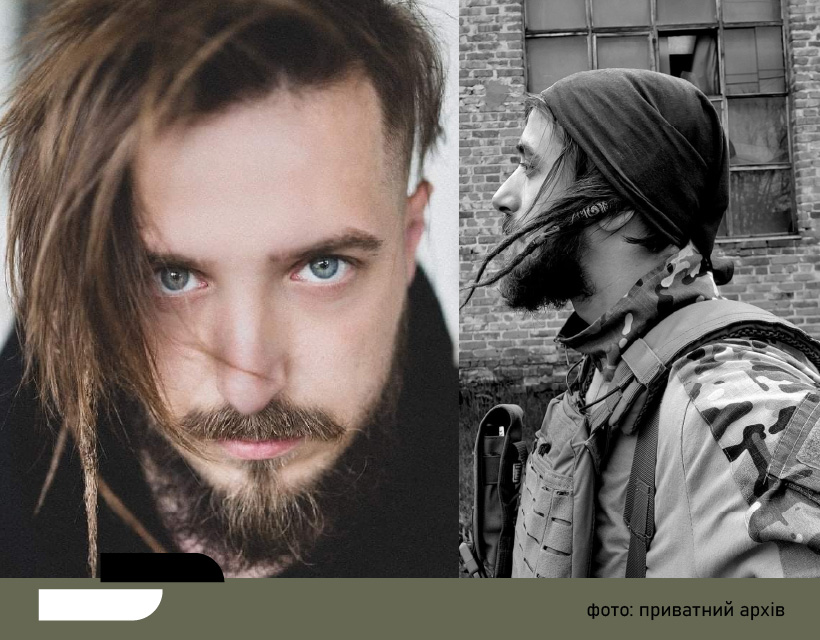
 photo courtesy of Maksym Kryvtsov


And it is breathtaking to witness how everything Ukrainian,  which was previously suppressed, is emerging at the surface today. Ivasyuk (Volodymyr Ivasyuk, Ukrainian singer), “Smerichka” (ensemble), folk clothes, forgotten movies… At the same time I fear the a regression— similar to what happened after the 1990s.

– You mentioned Ukrainian youth. How would you characterize them? What defines the next generation of Ukrainians?

They are remarkable — strong, open, talented, and inspired. There will be, of course, some inner contradictions and dialogues. Processes of adjusting, changing, and defining will occur. But these vital cells of the country will be flowing, bringing oxygen to its tender heart every day. We only need to win.

Read also: Petro Yatsenko: The heart of Mariupol is definitely alive

– What is war? How do you see it

I think the war is a kind of micellar water that washes cosmetics off: from a face, streets, plans and behaviors. It’s like a hoe cutting through sagebrush, leaving a bitter aftertaste of irreversibility. In war, you become your true self, no need to play a role. You are simply a human, one of billions who ever lived on the Earth, sharing the commonality of breath.

There’s no time for love at war. It lies next abandoned next to a trash pile and disappears like a grandfather in a fog, lost somewhere behind behind this summer’s unharvested sunflower fields of a heart.

– What aspects of war astound you the most? What do you find particularly challenging?

War is awful, absurd and very illogical. Yet, it is one of the forces that starts over and over again.

Imagine sitting in a vulnerable spot,  unable to move because the enemy is so close and your fortification are not quite strong enough, when   suddenly your fellow solider says: “Look, a hoopoe is eating a cabbageworm.” That’s a bird and a beetle (laughing). People who met us with applause in Balaklia (Editor’s note: Ukrainians town liberated during the Kharkiv counter offensive in 2022) astounded me. It was one of the best days of my life.

The most challenging part? Falling asleep, and grabbling with the horrors that might lie ahead…
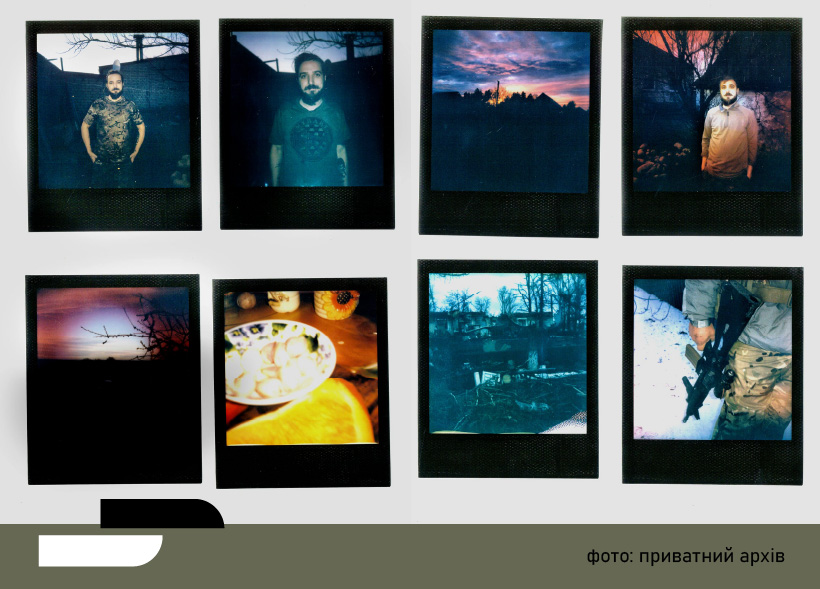
photo courtesy of Maksym Kryvtsov

– With your appearance, the way you articulate your thoughts, you come across more like a philosopher or a spiritual leader. Do you feel that the warrior’s role is truly reflective of who you are?

I’m not sure what resonates closely with me. In fact, I think I know very little. But perhaps there isn’t much to know. It’s about existing or not, breathing or being breathless. That’s why I am at war

– What traits of your character help you at your service?

 Calmness, maybe. Feeling of responsibility, sometimes, a bit of experience. The most important thing at war is to understand what you’re doing here. I think that a kind of naivety, childish wonder, weirdness, helps me at war. In the face of danger, I usually smile a lot and wait for adventures. It perhaps makes it easier to process things, I think. 

– Your call sign is Dali? What is the story behind it?

It’s quite straightforward. Someone asked me what my call sign is. I haven’t thought about it before, so I didn’t choose anything special. But then I grew a mustache and curled it just as Salvador Dali did. And so the call sign presented itself, much like an eager student (laughs).

– You are 33 now. Many call it “the age of Jesus Christ.” Do you feel somewhat special at that age?

I seldom remember my age. Here, days, dates, even months blend together. There’s no age, no time here. The important thing  is what happens at the end.

– You are a man of faith. What does your faith give you at this time?

I do not understand God. Like at all. I don’t know why he is protecting me, or what for.

Sometimes we have quarrels about religion in our division. I try to intercede for someone who, for some reason, still intercedes for me. I wear a cross on my neck, woven from red and black paracord.

– Do you pray? How does your prayer sound?

My prayers vary. Sometimes they’re traditional, other times they’re my own creation. At times I ask, at times I debate. It’s always different.

– In one of your previous interviews you mentioned that God is present at war, likening Him to “charging a machine gun.” Where and in what actions do you find God in such a setting?”

God is most often found in moments of silence. He is the water we carry on missions, which never seems to be enough. There was a time we nearly resorted to drinking from a puddle. He’s in the protein bar you eat while waiting in a trench for the shooting to stop. He’s present in the black, dry sunflowers that offer almost enough cover. But above all, God is in the act of returning.

–Can you tell us about your fellow solders?

They are the finest people in the world. Sometimes I take pictures of them, sometimes I write about them.

I met Kuznets in 2014, during a military exercise. While others crowded for stew and tea, he donned his chest protector and squatted alone, a figure of strength, intelligence, and calm. He grew irritated when discussions about the enemy or the ‘inner workings of the war’ interrupted his work. He believed in God, and God believed in him. He once showed me a stunning church in the Dnipropetrovsk region, adorned with blue peacocks and lakes, offering marshmallows at oblation, with a red-and-black flag greeting visitors. I left the base of the Ukrainian Volunteer Corps in the autumn of 2015.
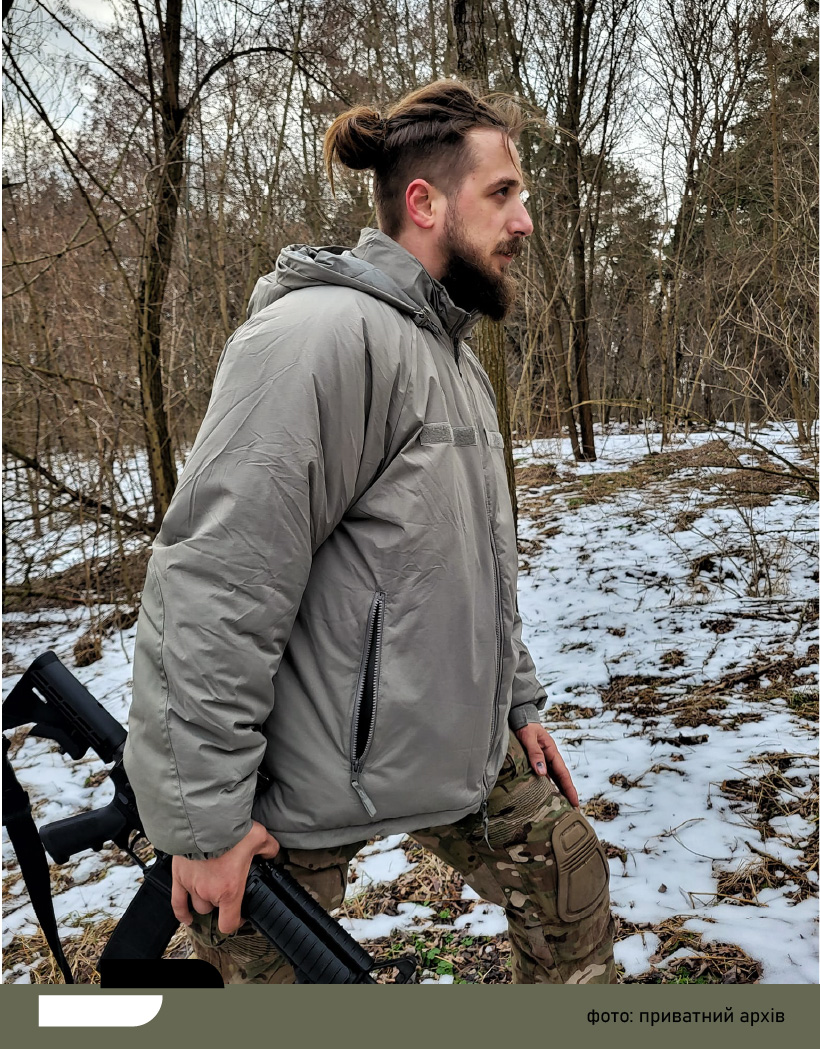
photo courtesy of Maksym Kryvtsov


I reunited with Kuznets near Zaporizhzhia in April this year. By then, he had become a skilled paratrooper, proficient in spotting for guns and operating Leleka spy drones.

Because Kuznets had faith in God, and God had faith in him, I know and have faith that he’s now next to Saint Peter, smiling down at us. I believe he watches over the earth through the eyes of birds,  and says who needs to be saved and where.

– Referring to your poetry, what will grow on “a field of memory, cropped with corn of sadness?” 

Popcorn (laughing). Sometimes, I write things and later struggle to understand them myself. 

But truly, the corn of sadness will remain just that — corn of sadness. The real challenge happens later — to gather it, grind and bake bread.

– Could you share some insights about the world that currently surrounds you? What elements are a part of it

Not long ago, I complained that over these thirteen months, I haven’t had a single day alone. That solitude is something I miss in the midst of war.

Our commander has a dog named Jango, who’s been with us since he was two months old, a little ‘froggy.’ He’s accompanied us to all our rotations, all the cities. When he was smaller, we would carry him to the cellar during shootings. There were bets on whether he’d make it to September. But he’s still here, causing mischief. Just the other day, he scattered some rubbish around the house (laughs).

We moved many times over these thirteen months. It is always interesting to explore new buildings where you live for some time: what books and photos there are. The funniest thing is to live in collaborators’ flats. A woman, collaborator, for example, had all the shelves in her apartment filled with soaps, shampoos and cotton wool sticks from various hotels. And she, by the way, was the owner of a pretty huge agro business. It is fascinating to observe these details. Another took everything important, but forgot her notebook in the basement, and it was full of very useful info. She worked as a Russian passport service assistant. I ate all the “Red Poppy” chocolates she had in her fridge (laughs).

– By the way, there’s a lot of references to food in your texts. What does this mean to you?

Please, cut the part with candies out, man (laughs). I didn’t realize my poetry had so many food references. Well, maybe it’s because food is something one understands: it has a smell, and form. I’m not entirely sure. 

Food is about something good. About childhood. And it’s about God.
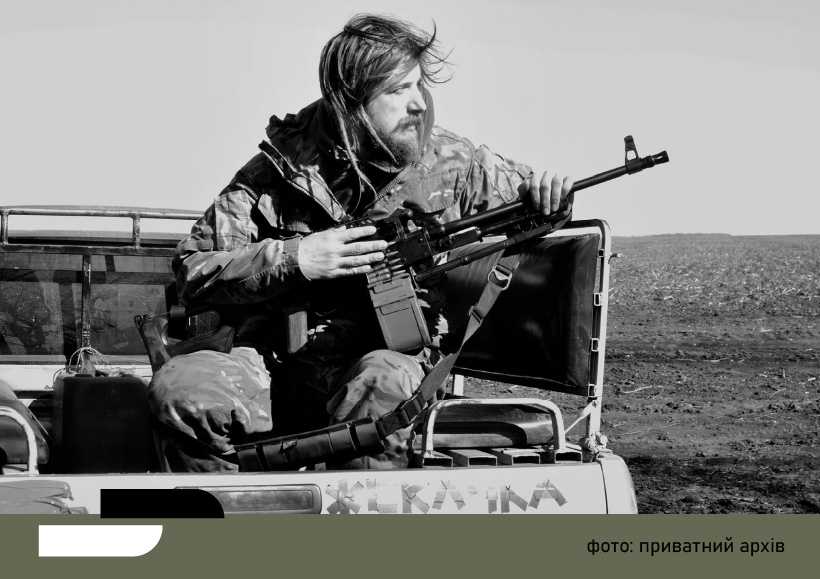
photo courtesy of Maksym Kryvtsov

– Your poetry is very delicate, touching, almost fragile to the point of seeming like it could shatter with one careless flick. What does this represent for you: a tightrope walk, pain, joy, catharsis?

In fact, I find joy in crafting short stories about people. Especially if they manage to go through all of this. As strange as it may seem, in today’s context, the greatest achievement seems to be simply surviving.

In this war, each person carries a unique, extraordinary story. They’re filled with distinct sounds, voices, and dreams. Some have spent their lives building a house, others became shift managers at poultry farms, some cherished reading thick books, while others collected fallen leaves and chestnuts. A person, to me, is a story.

– ​​”Your upcoming collection is titled ‘Verses from the Embrasure.’ An embrasure being a narrow opening in a defensive wall or a trench for firing through. If there had been no war, would you still write? What would your verses be about?

I wrote before the war, too. Back then, my verses were strange and simple. Now, I’m beginning to understand what I desire in my poetry: colors, scents, emotions, things both forgotten and recognized.

– Do you read your colleagues’ texts? What authors of modern Ukrainian war literature do you feel?

I appreciate the poetry of Valeriy Puzik, Yaryna Chornohuz, and Olena Herasymyuk. In prose, I’m drawn to ‘Point of No Return’ by Dmytro Verbych


RELATED: interviews with Valeriy Puzik and Yaryna Chornohuz


– Which internationally recognized artists do you think have best captured the essence of war?

Edvard Munch, through his series of paintings ‘The Scream,’ brilliantly conveyed it

I absolutely love the movies “Apocalypse Now” and “Taxi Driver.” When I come to have a rest for two-three days, I feel like Robert de Niro’s character. I am among other people, but at the same time I’m far away from everything. I’m an observer. My job is to be an observer of the world.
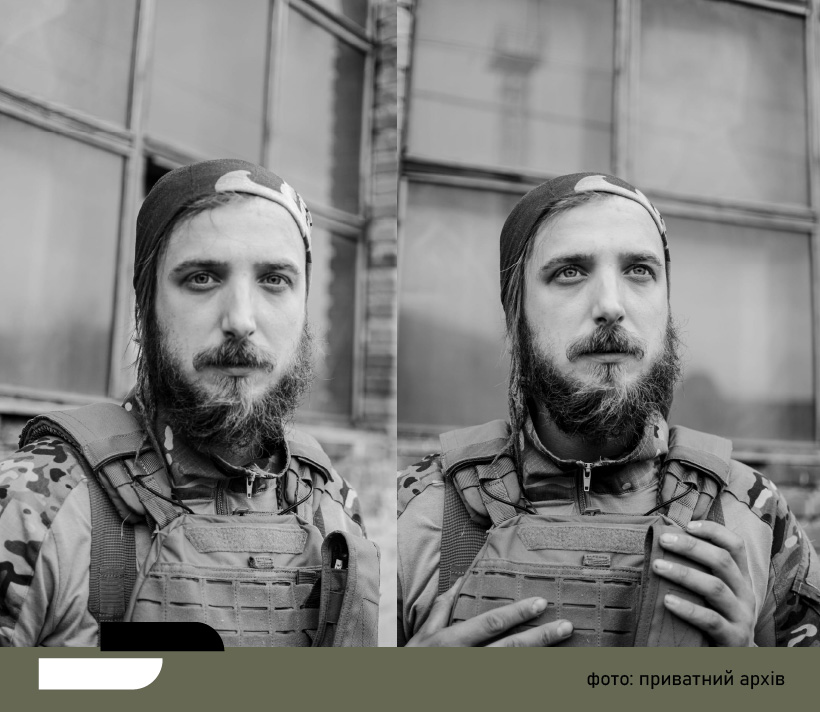
photo courtesy of Maksym Kryvtsov

I started reading “For Whom The Bell Tolls” at the beginning of April 2022. The main hero was to blow up the bridge, and it was April. And I felt it so deep. Especially knowing the fact that being at war you can live a whole life in two days. “Slaughterhouse 5” is great, too. I have even tattooed two phrases from the book on my forearm. The Psalms, incidentally, speak volumes about war, or more precisely, about individual battles.

For about a month, I’ve been listening to ‘Badass’ by Chartsyzy. I hope to have the strength to face death with a smile, as if it’s merely the end of a story.

– Your texts often incorporate religious motifs and narratives. Do you consider religion an integral part of the human experience?”

I think we are all cowards. We are afraid of ourselves, afraid of loneliness. So there’s always a need for someone you can turn to and who will accept you as you are.

– So, religion is about fear? What else?

About loneliness. About silence. About nature. About communion. About dialogue. About search: constant inner Google. About voice. About rain. About freshly baked pies with poppy seeds. About childhood and playing hide and seek in the attic. About different things.

– What will remain on Earth, if people disappear from it?

 Calmness.


Words and Bullets is the special project by Chytomo and PEN Ukraine about Ukrainian writers and journalists that joined the army or started volunteering when Russia invaded Ukraine in February this year. The name of the media project symbolizes the weapon used by the heroes and heroines of the project before Feb. 24, which they were forced to take up after the outbreak of a full-scale war with Russia. The special project is being implemented with the support of the National Endowment for Democracy (NED).


Translated by Iryna Savyuk

Edited by Jared Goyette


zondag 24 december 2023

AANRADER / #3FM SERIOUS REQUEST 2023: Wende - 'Als de Liefde niet bestond & Troostzoekers / ACTIE GOED DOEL ONDERZOEK ALS / #SR23 #GlazenHuis #StichtingALSNederland #Wende #AlsDeLiefdeNietBestond

Wende live met 'Als De Liefde Niet Bestond' | 3FM Serious Request 2023 | NPO 3FM

22 dec 2023 #SR23 #3FM #GlazenHuis  

De hele week belt Wijnand met zijn oma Rietje die hem vertelt over de tijd dat zijn opa ALS had. Op de laatste dag had Wijnand een speciale verrassing voor haar in de vorm van een optreden van Wende. Doneer direct, vraag een plaat aan of kom in actie voor 3FM Serious Request en Stichting ALS Nederland via 3fm.nl/seriousrequest

❯ Abonneer nu op NPO 3FM: https://3fm.nu/AbonneerOp3FM Vond je deze video leuk? Like! 

❯ 3FM Serious Request komt dit jaar in actie voor Stichting ALS Nederland, die onderzoek doet naar de oorzaak en behandeling van de ziekte en hulpmiddelen biedt aan mensen die ALS hebben. In de week voor Kerst van 17 t/m 24 december betreden 3FM-dj's Barend van Deelen, Sophie Hijlkema en Wijnand Speelman het Glazen Huis op de Grote Markt in Nijmegen. Hier zetten ze zich samen met heel Nederland dag en nacht in om zoveel mogelijk geld in te zamelen door 24 uur per dag live radio te maken en platen te draaien tegen donaties. 

 #3FM #SR23 #GlazenHuis #StichtingALSNederland #Wende #AlsDeLiefdeNietBestond

dinsdag 14 november 2023

BREAKING NEWS! / MAARTEN ZEGT(76)...NOU...DAAR IS'IE DAN: Binnenkort bij u thuis op de Buis(RTL) - De verste Dater van Nederland; Maarten H. van Gent! (En nu maar hopen op een Hele Strenge Winter...)

In z'n eentje dompelen in zijn wak in het meer van Porkuni ziet'ie niet meer zo zitten...

Dus zoekt hij gezelschap!

Je ziet er alles over:    ---  Hier  ---


woensdag 12 juli 2023

SHARTIE AART DEKKER / AANRADER! / FANTASTISCH INTERVIEW PODCAST: Willemijn Veenhoven interviewt Leon Verdonschot over o.a. Ronnie Flex & de liefde / KUNSTSTOF /


 *

SHARTIE AART DEKKER - FANTASTISCH INTERVIEW PODCAST

Willemijn Veenhoven interviewt Leon Verdonschot over o.a. Ronnie Flex & de liefde

Ik zat in de auto  - voor mij de momenten waar ik het meeste radio luister -  en viel middenin het Kunststof-interview van Willemijn Veenhoven met Leon Verdonschot, toevallig twee van de 'Media-mensen' die ik het leukst en meest interessant vind.

Het eerste deel  - dat ik dus gemist had en nu aan het inhalen ben -  ging over het nieuwste boek van duizendpoot Leon Verdonschot; een boek over de rapper Ronnie Flex. Óók leuk en interessant...

Maar in het tweede deel ging het over Verdonschot zelf, zijn fanschap van Bruce Springsteen, en (vooral) over zijn liefdesleven. En dat werd dus  - ook omdat Willemijn op dreef was, en de twee een overduidelijke geweldige klik hebben - één van de leukste interviews die ik in lange tijd zag, hoorde of las.

Een echte Aanrader dus!

Je kunt het beluisteren via de bovenstaande Twitterlink, of via de Podcasts van Kunststof  ---  Hier  ---.

(AD) 

Meer kunststof op de  site van Kunststof.

 *

maandag 7 maart 2022

SHARTIE AART DEKKER: Als een Blikseminslag Sloeg de Betekenis van 'Gimme Shelter' bij me in.... / MUZIEK / OEROUDE HOOGST ACTUELE (OORLOG IN UKRAÏNE): Leif de Leeuw, Sem Jansen & Shary-An – Gimme Shelter | Matthijs Gaat Door / JAM MATTHIJS GAAT DOOR / ROLLING STONES /


#TheRollingStones #GimmeShelter #OfficialLyricVideo

The Rolling Stones - Gimme Shelter (Official Lyric Video)

“Gimme Shelter” by The Rolling Stones 
Producer: Jimmy Miller
 
Composers: Mick Jagger and Keith Richards 
Lyricists: Mick Jagger and Keith Richards 
Associated Performers: Mick Jagger, Keith Richards, Charlie Watts, Bill Wyman, Merry Clayton, Nicky Hopkins, and Jimmy Miller 
 

Lyrics: 

Oh, a storm is threat'ning 

My very life today 

If I don't get some shelter 

Oh yeah, I'm gonna fade away 


War, children, it's just a shot away 

It's just a shot away 

War, children, it's just a shot away 

It's just a shot away 


Ooh, see the fire is sweepin' 

Our very street today 

Burns like a red coat carpet 

Mad bull lost your way 


War, children, it's just a shot away 

It's just a shot away 

War, children, it's just a shot away 

It's just a shot away 


Rape, murder! 

It's just a shot away 

It's just a shot away 

Rape, murder! 

It's just a shot away 

It's just a shot away 

Rape, murder! 

It's just a shot away 

It's just a shot away 

The flood is threat'ning 

My very life today 

Gimme, gimme shelter 

Or I'm gonna fade away 


War, children, it's just a shot away 

It's just a shot away 

War, children, it's just a shot away 

It's just a shot away

It's just a kiss away 

It's just a kiss away 

It's just a kiss away 

It's just a kiss away 

Kiss away, kiss away 

Gimme Shelter 

Directed by: Hector Santizo Producers: Julian Klein, Robin Klein, Mick Gochanour, Hector Santizo 

(C) 2016 ABKCO Music & Records, Inc. #TheRollingStones #GimmeShelter #OfficialLyricVideo

*

SHARTIE AART DEKKER

Als een Blikseminslag Sloeg de Betekenis van 'Gimme Shelter' bij me in....

OEROUDE MAAR INEENS WEER HOOGST ACTUELE MUZIEK:

Gimme Shelter

Ik weet het nog precies  - ik was een jaar of 12-13 en ik was op zomerkamp waar ik een van de jongsten was de oudste deelnemers waren een jaar of 16-18 -  ik liep op weg van een van de hoofdgebouwen richting tent en kwam langs een tent met oudere jeugd en daar klonk muziek...

Ik was op weg van een van de hoofdgebouwen naar de tent, en ik kwam langs een tent met veel oudere campers – ik schat een jaar of 16-18 – en er klonk muziek. Van het ene op het andere deuntje werd de volumeknop ineens op Max gezet...

De muziek die over het kampveld denderde was 'Satisfaction' van The Rolling Stones, maar dat wist ik toen nog niet. Het is best mogelijk dat ik 'I can't get no) Satisfaction' of iets anders van de Stones weleens eerder had gehoord – maar het is net zo goed mogelijk dat dit niet het geval was – maar nooit zo hard en zeker niet in de staat van ontvankelijkheid waarin ik me toen bevond.

De muziek kwam binnen als een bliksemschicht; ik was er ter plekke helemaal gek van en dus ook een Fan van de Stones...

Als ik zo'n ervaring had, dan dook ik er er wel – zoveel als binnen mijn mogelijkheden lag – wel in, dus in de tijd erna ontdekte ik wel meer muziek van de Stones en in hun kielzog meer (toen) Moderne Pop & Rock.

Ik weet niet hoe dat bij de gemiddelde Nederlander zit, maar het duurde nog lang voor ik me echt bewust werd van de betekenis van Engelstalige Teksten, en zelfs nu nog is dat niet altijd het geval terwijl mijn begrip van het Engels toch inmiddels bovengemiddeld is...

En nu is het weer Oorlog in Europa, en had 'Matthijs Gaat Door' (vorige week) een van die fantastische openingen die het programma bijzonder maken: een Jam van 'Gimme Shelter' van de Rolling Stones...

En toen kwam de betekenis van dit nummer – terwijl ik rationeel natuurlijk al lang wist wat die betekende – ineens keihard binnen; dit is wat vele miljoenen mensen in korte tijd nodig (zullen) hebben...'Gimme Shelter'...

Vandaag is er voor het eerst in lange tijd weer eens een Grote Landelijk Fundraiser van Giro 555 in alle Landelijke Media...en al geven we met zijn allen nog zoveel – ik vrees dat het het totaal niet in de buurt zal komen van soortgelijke Landelijke Hulpacties van de tijd van 'Gimme Shelter' en de eerste paar decennia erna – het zal nooit genoeg kunnen zijn...

SAMEN IN ACTIE VOOR OEKRAÏNE - Giro 555

Maar toch...

Onder de banner de uitvoering 

van 'Gimme Shelter' 

bij Matthijs Gaat Door

(AD)

 #MatthijsGaatDoor #BNNVARA

Leif de Leeuw, Sem Jansen & Shary-An – Gimme Shelter | Matthijs Gaat Door

In de week dat Rusland Oekraïne binnenvalt, begint onze uitzending met het Rolling Stones-nummer “Gimme Shelter”, door Leif de Leeuw, Sem Jansen, Shary-An en de Sven Hammond Big Band. 
 
Kijk Matthijs Gaat Door hier terug: https://www.npostart.nl/BV_101407542 
 
Muziek: Leif de Leeuw, Sem Jansen, Shary-An, Sven Hammond Big Band Origineel: “Gimme Shelter”, geschreven door Mick Jagger en Keith Richards, uitgebracht door Decca Kijkwijzer: alle leeftijden 
 

vrijdag 25 februari 2022

MUZIEK: Henny Vrienten - 't Ouwe liedje (1991) / TOEVALLIG OVER GESTRUIKELD /


Henny Vrienten - 't Ouwe liedje (1991)

17 jan. 2013

Henny Vrienten - 't Ouwe liedje, 

van het album: Mijn hart slaap nooit, uit 1991 


zo oud als de wereld is 't ouwe liedje 

en 't gaat over liefde of liefdesverdriet

iedereen zingt 't, dus zing ik maar mee

waar zou je anders over zingen, ik heb geen idee


en 't is simpel, zo simpel 

iedereen kan het, iedereen doet het 

ja 't is simpel, zo simpel:

ik vin je lief vind je lief


't is allemaal gezongen, 't is allemaal gezegd 

het kan nou eenmaal beter in een liedje uitgelegd 

alles lijkt op alles en alles is gedaan 

zoek niet naar iets anders, daar komt het niet op aan 


en 't is simpel, zo simpel 

iedereen kan het, iedereen doet het 

ja 't is simpel, zo simpel:

ik vin je lief vind je lief 


en kan niet zonder 

maar gaat dat toch ooit voorbij 

heb ik weer een reden voor een lied, 

er zijn er drie: ik wil haar, 

ik heb haar, ik ben haar kwijt 


en 't is simpel, zo simpel 

iedereen kan het, iedereen doet het 

ja 't is simpel, zo simpel:

ik vin je lief vind je lief


hebban olla vogala nestas bigunnan 

hinase hic enda thu


vrijdag 7 januari 2022

KNIPSEL UIT DE OUDE DOOS(2020): 'Vreemdenliefde' - Claudia de Breij / NRC-OPINIE COLUMNIST / GEMIS IN CORONA-TIJDPERK /


https://www.nrc.nl/nieuws/2020/11/02/vreemdenliefde-a4017440 

Vreemdenliefde

Claudia de Breij

Dit jaar heb ik vaak gedacht aan een gedicht van Judith Herzberg. Er is altijd wel een aanleiding om aan het werk van Judith Herzberg te denken (ze had de Nobelprijs voor de Literatuur moeten krijgen dit jaar als je het mij vraagt, maar niemand vraagt mij nooit niks) maar door de crisis van 2020 ontkwam ik haast geen dag aan dit gedicht:

Dozen

Omdat je in de oorlog altijd hoorde

van voor de oorlog, hoe argeloos

ze waren, ben ik nu heel voorzichtig.

Gooi ik iets weg, bijvoorbeeld

een kartonnen doos, dan hoop ik

dat die doos mij nooit meer zal

heroveren in de vorm van zelfverwijt;

weet je nog wel, hoe zorgeloos,

we gooiden gewoon dozen weg!

Als we er één hadden bewaard,

één hadden bewaard!

Mijn kartonnen doos blijkt te bestaan uit iets dat ik niet anders kan noemen dan casual, of op zijn Nederlands dan, oppervlakkig contact. Nee, oppervlakkig is niet het goede woord. Wat ik bedoel is het gemis aan mensen die je niet zo goed kent, met wie je niet intiem bent, die niet tot je huishouden behoren en zelfs niet tot je beste vrienden, maar met wie je toch zulke schitterende momenten kunt hebben.

Oppervlakkig is een woord met een negatieve connotatie, en diepzinnig kan ik het ook niet noemen, dat contact wat ik mis. Maar hoe noem je dat? Dat slap lullen met vreemden voor de deur van de kroeg. Die meta-lol van kinderachtige dansjes doen op cool bedoelde muziek met mensen die je niet zo goed kent maar die kennelijk ook in deze club zijn beland. Het juichen bij een wedstrijd met mensen die je nooit meer ziet maar met wie je nu innig omhelsd een doelpunt staat te vieren. Het zwetend, vooraan bij een lawaaiig bandje waar je niet eens heel erg fan van bent tegen mensen aanbotsen aan de rand van de moshpit (want middenin de moshpit is het mij te ruig). Muntjes weggeven aan mensen die nog blijven, ze blij maken met het bier dat jij toch niet meer gaat halen.

Oppervlakkig is dat niet. Wat is het wel? Ik voelde het toen ik deze lente op de saaiste Koningsdag ooit in een oranje shirtje door het park wandelde om lekkere dingen voor de borrel te gaan kopen en zag dat er nog een paar mensen zo kneuterig waren geweest. Buurtgenoot, historicus en professioneel brompot Maarten van Rossem deed boodschappen bij dezelfde winkel en kon, gehuld in zijn zwarte trui, niet geloven dat ik opzettelijk oranje droeg. Daarna kletsten we wat over de monarchie en wie er nog wel aardig waren opgedroogd in die familie en vervolgden we onze weg.

Praatjes maken, feestjes vieren, andere mensen spreken dan de mensen die je al kent. Het is geen oppervlakkig contact. Het is een vreemde liefde.

Vreemdenliefde, die bloeit bij argeloosheid, en vergaat als je voorzichtig moet zijn.