Oekraïner Maksym Kryvtsov was een dichter aan het front. Hij
schreef over de oorlog, gevoed door zijn eigen ervaringen, met een
zekere lichtheid en relativering. Zondag werd hij gedood.
In zijn laatste bericht op Facebook nodigde Maksym Kryvtsov,
dichter en soldaat, zijn volgers uit voor een spelletje over zijn
gedichten. Hij waarschuwde ze wel: „90 procent van mijn gedichten
gaat over de dood.”
Maksym Kryvtsov, geboren op 22 januari 1990, groeide op in zijn
geboorteplaats Rivne, in het noordwesten van Oekraïne. Hij volgde
een opleiding aan de lokale school voor technologie en design en
zette dat voort aan de universiteit in Kyiv, met schoeisel en
producten van leer als specialisatie. Eind 2013 en begin 2014 nam hij
deel aan de pro-Europese Maidanrevolutie in Kyiv.
in slotregels gedichtMaksym Kryvtsov Was het maar vast lente / Om
eindelijk als viooltje te bloeien
Na de Russische invasie van 2014 meldde hij zich aan bij het
vrijwilligerscorps van een rechts-nationalistische partij en vocht
hij een jaar lang mee in de Donbas. Na een korte pauze ging hij
opnieuw naar het front, nu bij de Nationale Garde. Vanaf 2019 was hij
actief voor veteranenorganisaties en zette hij zich in voor
Gestreepte
Wasberen, een organisatie die jeugdkampen organiseert met
Oekraïens patriottisme. Na de nieuwe Russische invasie, bijna twee
jaar geleden, meldde Kryvtsov zich bij de nationale strijdkrachten.
Dichten deed Kryvtsov al sinds zijn jeugd. Veel van zijn werk
verscheen in bloemlezingen, zijn eerste bundel Gedichten uit het
schietgat (Virshi z biynytsi) werd vorig jaar
gepubliceerd. Op een foto van vlak voor zijn dood leest -Kryvtsov aan
het front in die bundel terwijl hij een hond aait. Hij was een war
poet; zijn gedichten gaan over oorlog en dood, maar bevatten ook
een zekere lichtheid en relativering. Retoriek was hem vreemd.
‘Gedichten uit een schietgat’ werd vorige maand door
schrijversorganisatie PEN Oekraïne opgenomen in de lijst
van beste Oekraïense boeken van 2023 – al is die lijst met 179
titels totaal en zeventien dichtbundels behoorlijk lang.
Editor’s note: Maksym Kryvtsov, a Ukrainian poet turned soldier, was recently killed by Russia forces at the front. Chytomo interviewed him in 2023, and we are sharing the article now.
Kryvtsov’s poetic sensibilities and humor, interwoven
with his experiences on the front lines, offer a rare, and deeply human
glimpse into realities of Russia’s war against Ukraine, as well as the
enduring power of the Revolution of Dignity. His latest book is being
reprinted, with proceeds going to support his family and book projects
for service members. International shipping is available, details here.
—
Maksym Kryvtsov, a poet who participated in the Revolution of
Dignity, enlisted in 2014 after Russia invaded. Later, after returning
to civilian life, he worked to help veterans reintegrate into society,
and also enjoyed working as an instructor at a children’s camp.
Following Russia’s full scale invasion, he returned to the frontline.
For the next thirteen months, he did not spent a single day alone. As
Maksym admitted in our interview, he misses those moments of solitude.
As part of the project “Words and Bullets”, produced by Chytomo and
PEN Ukraine, we asked Maksym about the changes he’s observed over these
nine years of war, the greatest challenges faced by the military, his
perspective on young Ukrainians and his thoughts on the role of God in
war.
– In 2014, you joined the Ukrainian Volunteer Corps as a
volunteer. Did you realize back then that this war would last many years
and that first stage would grow into full-scale invasion?
I realized nothing back then.
Everything around me was new — people, smells, sounds. The ruins, the
wounded, the weapons. It was like I needed to chew the same gum for a
long time. I was haunted by a terrifying dream, frequently revisiting it
in my sleep: roaming around Kyiv with a rifle in my hands, and waiting
for my metro stop with a weapon on my knees. I am one of those dreadful
people who said the war must come to the streets as a blaze, so others
could understand what was actually going on. But I came to regret those
thoughts on the morning of Feb. 24.
– You have a poem:
Once upon a time
in spring of 2014
I fell asleep
and didn’t wake for a couple of years
my dreams were covered in snow and so cold
just like palms of a dead near Izyum
I think I didn’t wake up
fell asleep in this long
as a mature black-snake
dream
– What has changed over these nine years of the war: in ourselves, our state, the army, and your perception of the war?
In these nine years, the
Earth orbited the Sun nine times, birds have migrated to warmer regions
and returned nine times, leaves fell down and trees formed buds nine
times. Many things changed over these nine years.
As to social processes, after 2014 an
engine of a train named “Ukraine” was started. There started to emerge
discussions of the importance of the language, culture and so on. In
cinemas, you could watch movies not only with Dwayne “Rock” Johnson, but
also with many Ukrainian actors. Discovering such initiatives as БУР (BUR, “Building Ukraine Together”, youth non-governmental organization), УАЛ (UAL, “Ukrainian Leadership Academy”, platform for youth) was truly heartening. New communities of people formed, united by the desire to do something good and take responsibility.
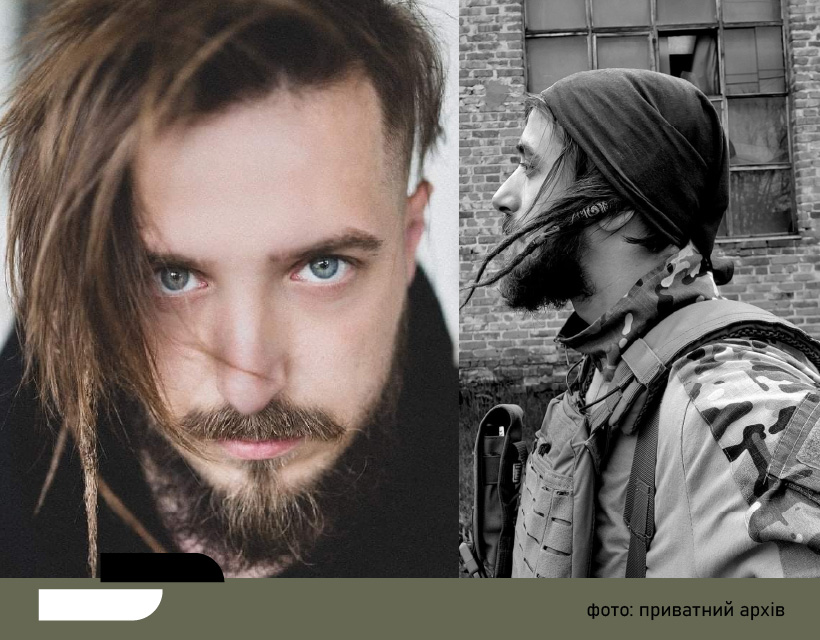
photo courtesy of Maksym Kryvtsov
And it is breathtaking to witness how
everything Ukrainian, which was previously suppressed, is emerging at
the surface today. Ivasyuk (Volodymyr Ivasyuk, Ukrainian singer), “Smerichka” (ensemble), folk clothes, forgotten movies… At the same time I fear the a regression— similar to what happened after the 1990s.
– You mentioned Ukrainian youth. How would you characterize them? What defines the next generation of Ukrainians?
They are remarkable — strong, open,
talented, and inspired. There will be, of course, some inner
contradictions and dialogues. Processes of adjusting, changing, and
defining will occur. But these vital cells of the country will be
flowing, bringing oxygen to its tender heart every day. We only need to
win.
Read also: Petro Yatsenko: The heart of Mariupol is definitely alive
– What is war? How do you see it
I think the war is a kind of micellar water that washes cosmetics
off: from a face, streets, plans and behaviors. It’s like a hoe cutting
through sagebrush, leaving a bitter aftertaste of irreversibility. In
war, you become your true self, no need to play a role. You are simply a
human, one of billions who ever lived on the Earth, sharing the
commonality of breath.
There’s no time for love at war. It
lies next abandoned next to a trash pile and disappears like a
grandfather in a fog, lost somewhere behind behind this summer’s
unharvested sunflower fields of a heart.
– What aspects of war astound you the most? What do you find particularly challenging?
War is awful, absurd and very illogical. Yet, it is one of the forces that starts over and over again.
Imagine sitting in a vulnerable
spot, unable to move because the enemy is so close and your
fortification are not quite strong enough, when suddenly your fellow
solider says: “Look, a hoopoe is eating a cabbageworm.” That’s a bird
and a beetle (laughing). People who met us with applause in Balaklia (Editor’s note: Ukrainians town liberated during the Kharkiv counter offensive in 2022) astounded me. It was one of the best days of my life.
The most challenging part? Falling asleep, and grabbling with the horrors that might lie ahead…
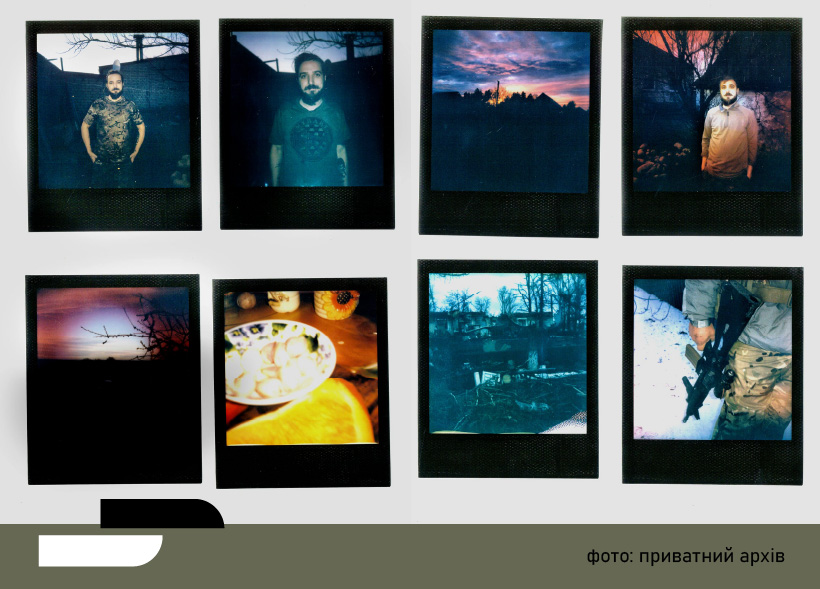
photo courtesy of Maksym Kryvtsov
– With your appearance, the way you articulate your
thoughts, you come across more like a philosopher or a spiritual leader.
Do you feel that the warrior’s role is truly reflective of who you are?
I’m not sure what resonates closely
with me. In fact, I think I know very little. But perhaps there isn’t
much to know. It’s about existing or not, breathing or being breathless.
That’s why I am at war
– What traits of your character help you at your service?
Calmness, maybe. Feeling of
responsibility, sometimes, a bit of experience. The most important thing
at war is to understand what you’re doing here. I think that a kind of
naivety, childish wonder, weirdness, helps me at war. In the face of
danger, I usually smile a lot and wait for adventures. It perhaps makes
it easier to process things, I think.
– Your call sign is Dali? What is the story behind it?
It’s quite straightforward. Someone
asked me what my call sign is. I haven’t thought about it before, so I
didn’t choose anything special. But then I grew a mustache and curled it
just as Salvador Dali did. And so the call sign presented itself, much
like an eager student (laughs).
– You are 33 now. Many call it “the age of Jesus Christ.” Do you feel somewhat special at that age?
I seldom remember my age. Here, days,
dates, even months blend together. There’s no age, no time here. The
important thing is what happens at the end.
– You are a man of faith. What does your faith give you at this time?
I do not understand God. Like at all. I don’t know why he is protecting me, or what for.
Sometimes we have quarrels about
religion in our division. I try to intercede for someone who, for some
reason, still intercedes for me. I wear a cross on my neck, woven from red and black paracord.
– Do you pray? How does your prayer sound?
My prayers vary. Sometimes they’re
traditional, other times they’re my own creation. At times I ask, at
times I debate. It’s always different.
– In one of your previous interviews you mentioned that God is present at war, likening Him to “charging a machine gun.” Where and in what actions do you find God in such a setting?”
God is most often found in moments of silence. He is the water we
carry on missions, which never seems to be enough. There was a time we
nearly resorted to drinking from a puddle. He’s in the protein bar you
eat while waiting in a trench for the shooting to stop. He’s present in
the black, dry sunflowers that offer almost enough cover. But above all,
God is in the act of returning.
–Can you tell us about your fellow solders?
They are the finest people in the world. Sometimes I take pictures of them, sometimes I write about them.
I met Kuznets in 2014, during a military exercise. While others
crowded for stew and tea, he donned his chest protector and squatted
alone, a figure of strength, intelligence, and calm. He grew irritated
when discussions about the enemy or the ‘inner workings of the war’
interrupted his work. He believed in God, and God believed in him. He
once showed me a stunning church in the Dnipropetrovsk region, adorned
with blue peacocks and lakes, offering marshmallows at oblation, with a
red-and-black flag greeting visitors. I left the base of the Ukrainian
Volunteer Corps in the autumn of 2015.
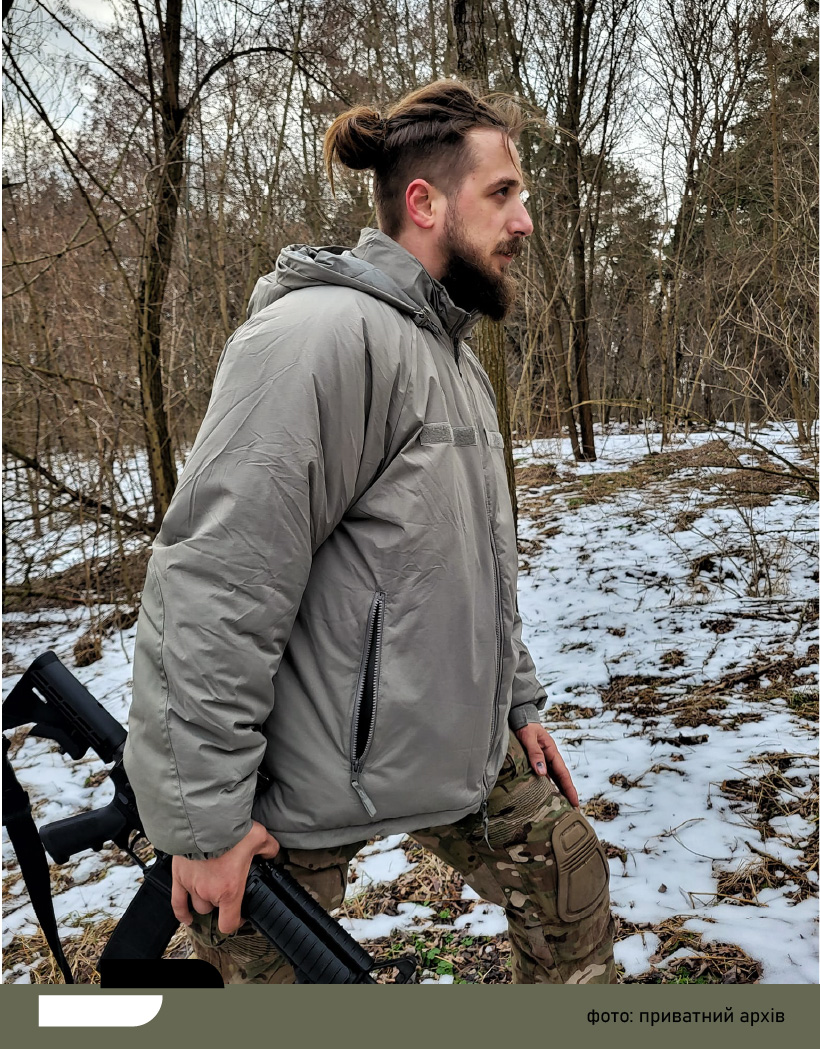
photo courtesy of Maksym Kryvtsov
I reunited with Kuznets near Zaporizhzhia in April this year. By
then, he had become a skilled paratrooper, proficient in spotting for
guns and operating Leleka spy drones.
Because Kuznets had faith in God, and
God had faith in him, I know and have faith that he’s now next to Saint
Peter, smiling down at us. I believe he watches over the earth through
the eyes of birds, and says who needs to be saved and where.
– Referring to your poetry, what will grow on “a field of memory, cropped with corn of sadness?”
Popcorn (laughing). Sometimes, I write things and later struggle to understand them myself.
But truly, the corn of sadness will
remain just that — corn of sadness. The real challenge happens later —
to gather it, grind and bake bread.
– Could you share some insights about the world that currently surrounds you? What elements are a part of it
Not long ago, I complained that over these thirteen months, I haven’t
had a single day alone. That solitude is something I miss in the midst
of war.
Our commander has a dog named Jango, who’s been with us since he was
two months old, a little ‘froggy.’ He’s accompanied us to all our
rotations, all the cities. When he was smaller, we would carry him to
the cellar during shootings. There were bets on whether he’d make it to
September. But he’s still here, causing mischief. Just the other day, he
scattered some rubbish around the house (laughs).
We moved many times over these
thirteen months. It is always interesting to explore new buildings where
you live for some time: what books and photos there are. The funniest
thing is to live in collaborators’ flats. A woman, collaborator, for
example, had all the shelves in her apartment filled with soaps,
shampoos and cotton wool sticks from various hotels. And she, by the
way, was the owner of a pretty huge agro business. It is fascinating to
observe these details. Another took everything important, but forgot her
notebook in the basement, and it was full of very useful info. She
worked as a Russian passport service assistant. I ate all the “Red
Poppy” chocolates she had in her fridge (laughs).
– By the way, there’s a lot of references to food in your texts. What does this mean to you?
Please, cut the part with candies out, man (laughs).
I didn’t realize my poetry had so many food references. Well, maybe
it’s because food is something one understands: it has a smell, and
form. I’m not entirely sure.
Food is about something good. About childhood. And it’s about God.
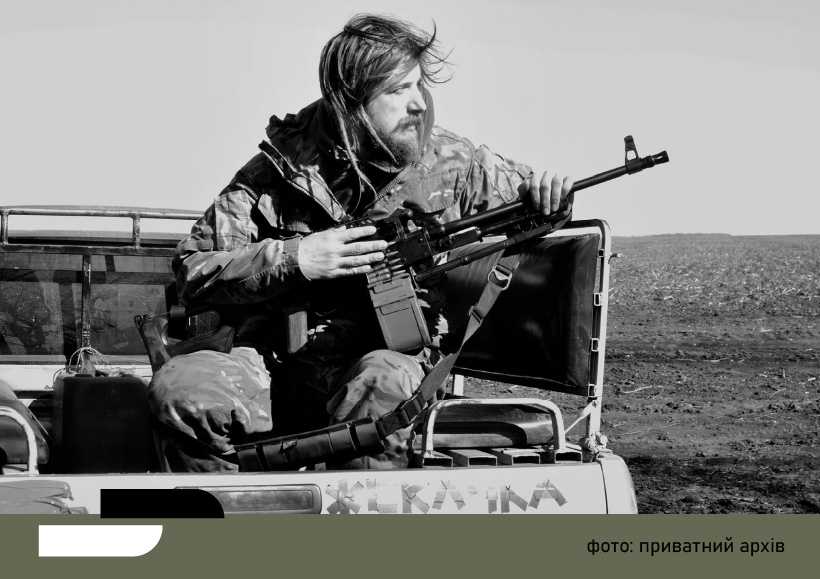
photo courtesy of Maksym Kryvtsov
– Your poetry is very delicate, touching, almost fragile to
the point of seeming like it could shatter with one careless flick. What
does this represent for you: a tightrope walk, pain, joy, catharsis?
In fact, I find joy in crafting short
stories about people. Especially if they manage to go through all of
this. As strange as it may seem, in today’s context, the greatest
achievement seems to be simply surviving.
In this war, each person carries a
unique, extraordinary story. They’re filled with distinct sounds,
voices, and dreams. Some have spent their lives building a house, others
became shift managers at poultry farms, some cherished reading thick
books, while others collected fallen leaves and chestnuts. A person, to
me, is a story.
– ”Your upcoming collection is titled ‘Verses from the
Embrasure.’ An embrasure being a narrow opening in a defensive wall or a
trench for firing through. If there had been no war, would you still
write? What would your verses be about?
I wrote before the war, too. Back then, my verses were strange and
simple. Now, I’m beginning to understand what I desire in my poetry:
colors, scents, emotions, things both forgotten and recognized.
– Do you read your colleagues’ texts? What authors of modern Ukrainian war literature do you feel?
I appreciate the poetry of Valeriy Puzik, Yaryna Chornohuz, and Olena
Herasymyuk. In prose, I’m drawn to ‘Point of No Return’ by Dmytro
Verbych
RELATED: interviews with Valeriy Puzik and Yaryna Chornohuz
– Which internationally recognized artists do you think have best captured the essence of war?
Edvard Munch, through his series of paintings ‘The Scream,’ brilliantly conveyed it
I absolutely love the movies
“Apocalypse Now” and “Taxi Driver.” When I come to have a rest for
two-three days, I feel like Robert de Niro’s character. I am among other
people, but at the same time I’m far away from everything. I’m an
observer. My job is to be an observer of the world.
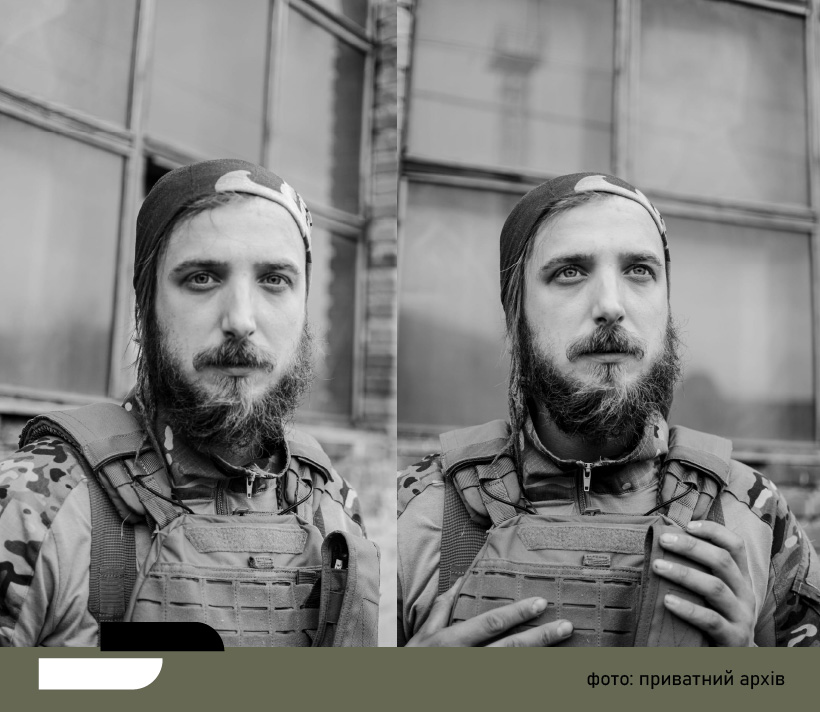
photo courtesy of Maksym Kryvtsov
I started reading “For Whom The Bell
Tolls” at the beginning of April 2022. The main hero was to blow up the
bridge, and it was April. And I felt it so deep. Especially knowing the
fact that being at war you can live a whole life in two days.
“Slaughterhouse 5” is great, too. I have even tattooed two phrases from
the book on my forearm. The Psalms, incidentally, speak volumes about
war, or more precisely, about individual battles.
For about a month, I’ve been listening to ‘Badass’ by Chartsyzy. I
hope to have the strength to face death with a smile, as if it’s merely
the end of a story.
– Your texts often incorporate religious motifs and
narratives. Do you consider religion an integral part of the human
experience?”
I think we are all cowards. We are
afraid of ourselves, afraid of loneliness. So there’s always a need for
someone you can turn to and who will accept you as you are.
– So, religion is about fear? What else?
About loneliness. About silence.
About nature. About communion. About dialogue. About search: constant
inner Google. About voice. About rain. About freshly baked pies with
poppy seeds. About childhood and playing hide and seek in the attic.
About different things.
– What will remain on Earth, if people disappear from it?
Calmness.
Words and Bullets
is the special project by Chytomo and PEN Ukraine about Ukrainian
writers and journalists that joined the army or started volunteering
when Russia invaded Ukraine in February this year. The name of the media
project symbolizes the weapon used by the heroes and heroines of the
project before Feb. 24, which they were forced to take up after the
outbreak of a full-scale war with Russia. The special project is being
implemented with the support of the National Endowment for Democracy
(NED).
Translated by Iryna Savyuk
Edited by Jared Goyette

.jpg)


/s3/static.nrc.nl/images/gn4/stripped/data109970623-2632c9.jpg)
/s3/static.nrc.nl/bvhw/files/2024/01/data109799279-117c7b.jpg)

.jpg)
.jpg)
/s3/static.nrc.nl/images/gn4/stripped/data84689888-7c0a13.jpg)
.jpg)
.jpg)
.jpg)


/s3/static.nrc.nl/images/gn4/stripped/data32107718-f66ed5.jpg)


 Posts
Posts


